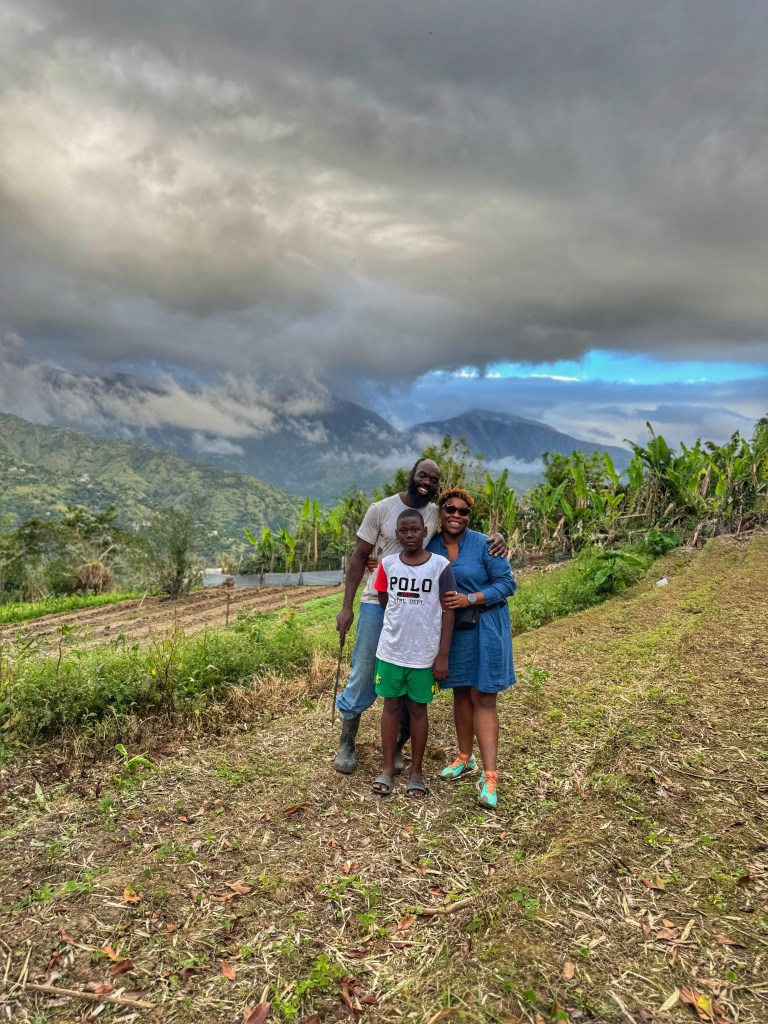
The last time I saw Fitzroy Mais was in 2017, when his son Aiden was two years old. I had just started gardening in the States a few years earlier, full of that particular optimism that comes with turning your first beds, planting your first seeds. I was living on land in western Washington, building what I thought would be Bunkhouse Acres’ long future.
Seven years later, I’ve closed that farm and donated all my equipment to Rohn Amegatcher at Log Hollow Farms. Fitzroy is still farming. Aiden is ten now, wearing rubber slides and kicking a football with his father in the farmyard. There’s also Karissa, now thirteen, represented by a peach tree Fitzroy planted the year she was born.
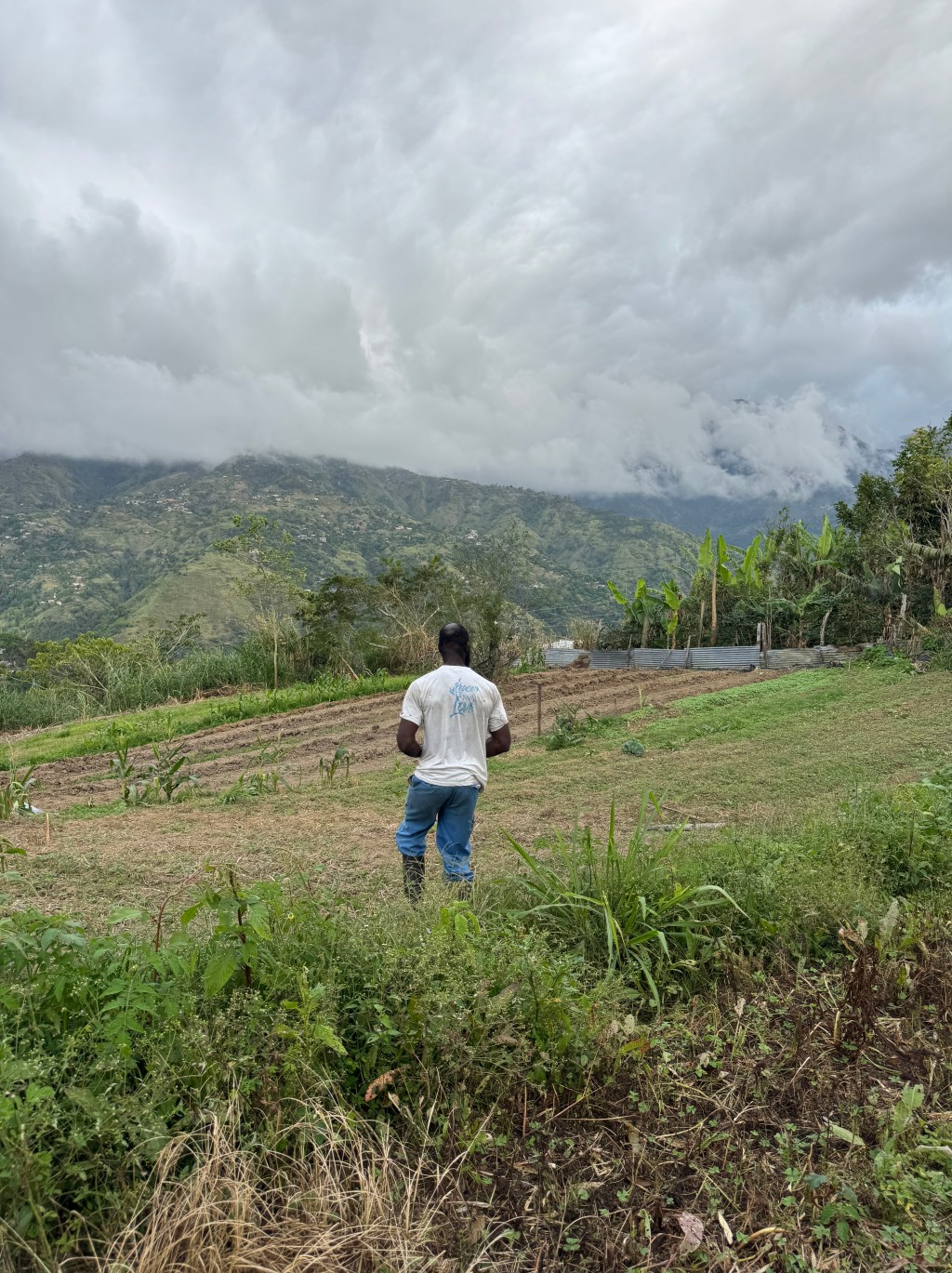
Yesterday I made the winding drive up to Content Gap, near Guava Ridge, an hour from Kingston but a world away in elevation and temperament. The road curves relentlessly, the kind of driving that requires presence. You can’t think about anything but the next turn, the drop-off to your right, the diesel truck coming down that might or might not give you space to pass. From Gordon Town up, there were multiple landslides and uprooted trees. Heavy equipment was doing clearing and repair work—another reminder that Melissa’s damage wasn’t just to the crops but to the very roads that connect these communities to markets and visitors.
Though not comparable to the swath of destruction faced by western parishes, Jamaica’s hilly interior (even here in the east) suffered from Melissa’s winds and torrential rainfall. Fitzroy’s last planting was completely washed out by the rains. He’d planted right after a severe drought had finally broken, thinking he’d timed it right for a December harvest. Instead, Melissa devastated it all. Everything he’d put in the ground before the storm: gone. His home sustained some structural damage as well. This is the kind of loss that would make some people pause, reconsider, maybe take a season off.
But when I arrived, Fitzroy was replanting a lettuce nursery. Working on terracing another field. Planning sweet peppers. His hands in the soil like the hurricane was routine weather, just another thing that happened, just part of the terms of engagement when you’re a farmer in Jamaica’s interior. His strawberries, what he’s best known for, are slowly coming back.
An inheritance from his grandfather on his father’s side, passed down through generations, Fitzroy has been on this land since he was three years old. He went to Content Gap All-Age school just up the road. This isn’t a place he chose as an adult looking for a lifestyle change. This is home, has always been home, will always be home.
Thirteen years ago, two weeks after Karissa was born, he was laid off from his nine-to-five job with a sanitation company. That’s when he decided to farm full-time. He attributes everything to his daughter, to that moment when he had to choose what kind of life he wanted to build for his children.
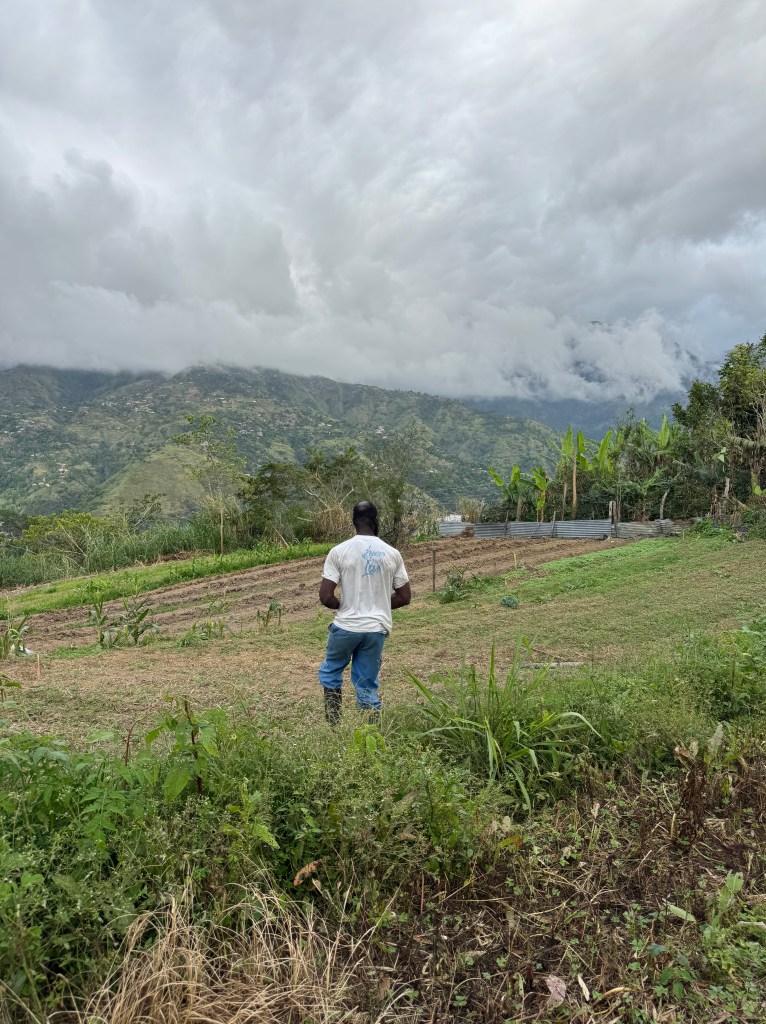
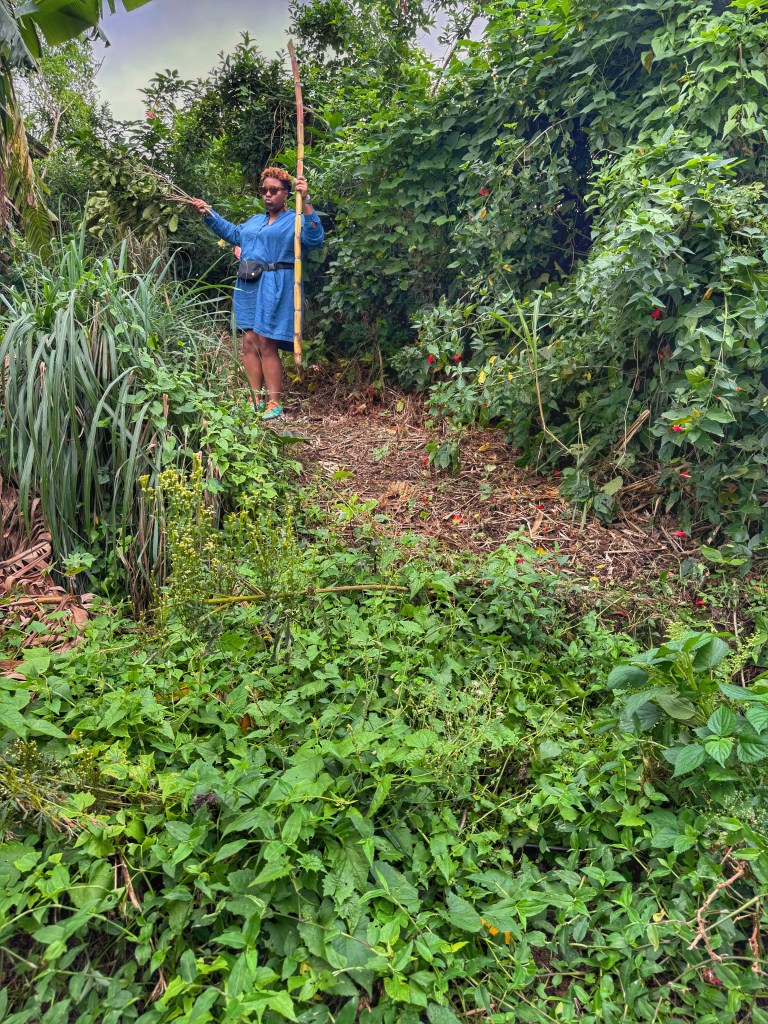
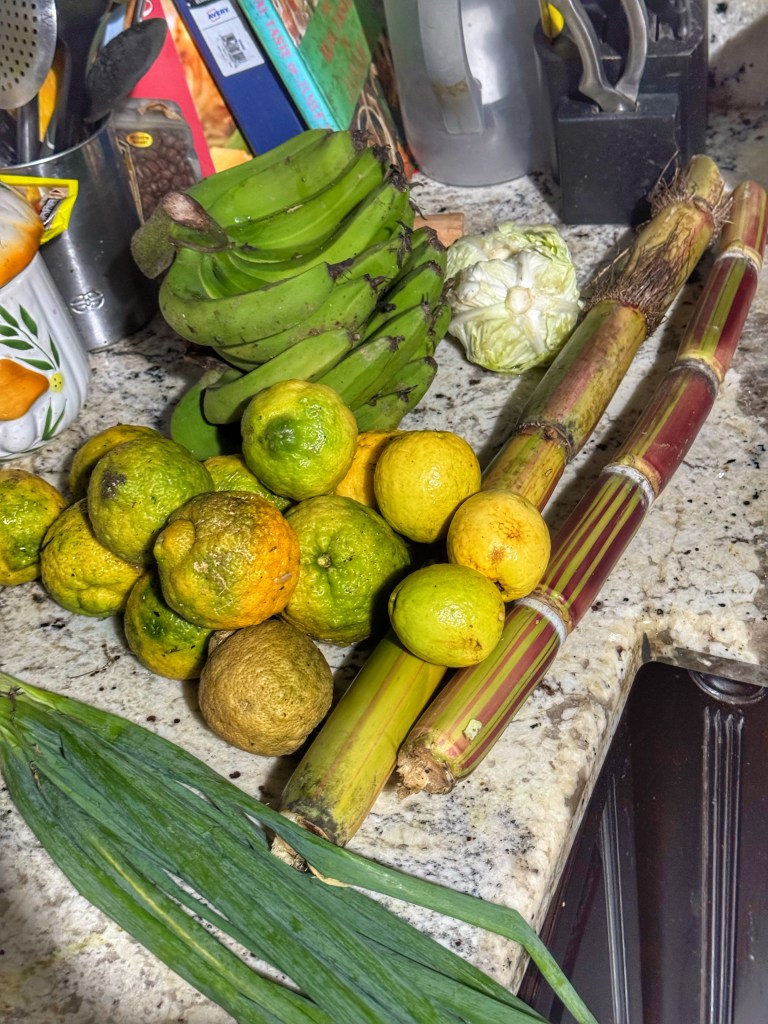

We walked the property, and he showed me what Melissa had done. A pimento tree blown down, its wood still fragrant and useful. Terraces that would need reworking, though comfrey and oxalis sprouted throughout. The places where water had run too fast, taken a little too much. He told me he’s thinking about constructing greenhouses, finding ways to manage excess water damage from rainfall, and planning for agrotourism to diversify. Then, without ceremony, he started gathering food for me to take: sugar cane, guavas, green bananas, lemons, wood from that fallen pimento tree, scallions, and a cabbage smaller than usual.
I insisted the cabbage was perfectly fine. Because it was. Because the obsession with aesthetic perfection in produce is a luxury that ignores how things actually grow, how weather actually works, how a farmer after a hurricane is doing everything he can just to have anything to harvest at all.
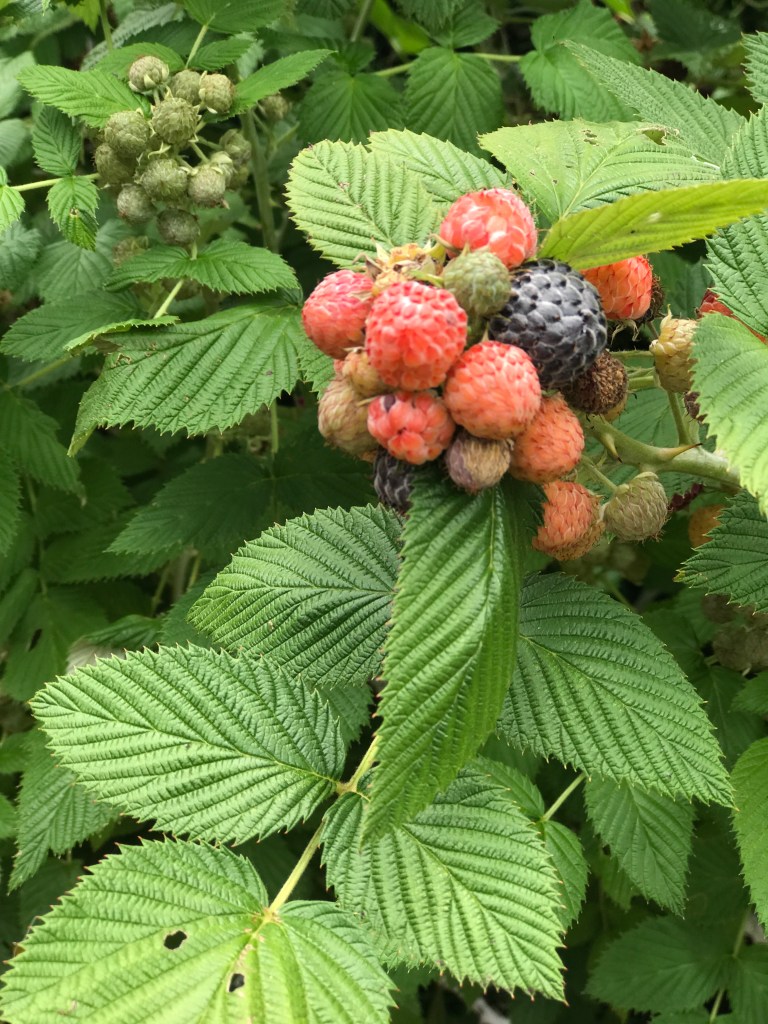
We walked, and I ate as we went. Surinam cherry tart and bright on my tongue, oxalis with its lemony bite, bramble berries that stained my fingers, and floral-sweet guavas with an abundance of seedy promise. You learn land by walking it, by tasting plants that grow without asking permission, by understanding that a farm is not just the crops you plant but everything that persists in spite of you, because of you, alongside you.
I watched Fitzroy and Aiden kick a football across the farmyard. This is what it looks like when a father shows his son how to be rooted and free at the same time. How to tend what’s in front of you. How to start again when the rain washes everything away. How to keep going even when Jamaica fails to directly qualify for the World Cup. You keep planting. You keep playing. You trust the process.
Aiden had taken a break from homework (a project on the four major religions: Islam, Buddhism, Christianity, and Hinduism) to play in the yard and to remind his father that he needed to set up a hotspot so he could get on the internet to do research. This is a kind of interruption that happens when your classroom is also your farm, when learning about the world’s faiths means first understanding the faith it takes to work land like this.
Fitzroy recalled a lesson he taught the kids while working on a compost pile, explaining that he was mimicking nature’s own fertilization process. “Nobody fertilizes the forest, and those trees are the most beautiful,” he told them. “That is what composting is.” This is how you teach. You communicate not just what to do, but why. You explain not just the task, but the principle behind it.
The kids aren’t pushed into farming, he told me. They have schoolwork and their own interests. But in their spare time, they help out, and he shows them the ropes of using tools and the reasons and benefits behind what he’s doing. He teaches them about living disciplined lives: waking up early, getting enough sleep, getting things done before the afternoon rain comes and takes away your productive hours. No delay. Getting it done quickly. They get their homework done quickly, too, because they’re up early to prepare for school. These are principles that work whether you’re composting or completing a project on world religions.
I haven’t talked to them about belief, but what I feel surrounding the space every time I visit is its own kind of devotion: love, care, tending, a sense of place, of rootedness. As an immigrant with one foot in two places, I long to have that. I give thanks for Aiden’s growth since I last saw him at two. I give thanks for my own changes (shorter hair now, less of some things), and I trust the pruning process.

My mother’s land in Aboukir, St. Ann, was washed clean by Melissa. My brother’s yam crop in Smithville, Clarendon, was destroyed by erosion. Farmers in Linton Park, St. Ann, have also lost their December harvest. This is what I mean when I say the interior suffered: not just one farm, but networks of small growers across parishes, each dealing with their own washed-out plantings, their own blown-down trees, their own calculations about whether to replant or wait. Each loss reverberates through families, through communities, through the quiet economic networks that keep rural Jamaica fed and functioning.
I think about what it means that I closed my farm, and Fitzroy didn’t. The circumstances were different (mine ended in divorce, his continues through hurricanes and being a single father raising two kids), but it’s also about something else: the question of what you’re willing to persist through, and why.
Fitzroy persists because this is his land, his community, his children’s inheritance. Because the people in Kingston, Port Antonio, Content Gap, Guava Ridge, and the surrounding hills need lettuce and cabbage and scallions, and strawberries. Because when you’re embedded in a place, fed by it and feeding it, leaving isn’t simple math about profit margins and perfect produce.
He wants people to know that Content Gap is a tranquil community where you can chill for the weekend, get away for a day, breathe natural fresh air, and enjoy the ambiance of the Blue Mountains. He hosts field trips and organic farm tours for schools, provides a catered lunch, and welcomes visitors to show them the way. He wants to encourage people to get into small-scale farming.
“Farming is a very profitable career, very high risk, but the future belongs to risk takers,” he told me. “It’s not always winning all the time. Put down something when you’re winning so you can get back on your feet when the time comes. It’s a worthwhile job.”
The farmers in Jamaica’s interior (the ones an hour from Kingston up winding roads, the ones two hours into the hills where cell service cuts out, the ones who lost entire plantings to Melissa’s rains) are not making headlines. The devastation in western parishes rightfully demands attention and resources. But these farmers are here too, replanting, terracing, nursing seedlings, and finding ways forward.
When I think about what disaster relief actually looks like, I think it has to include this: the ongoing choice to buy local even when the cabbage is smaller than you expected. The willingness to drive the winding road to visit people who are still working the land. The recognition that irregular produce, produce that shows the weather it survived, is not inferior. It’s honest.
If you have a car and an hour, Fitzroy is accessible. So are dozens of other farmers throughout the interior. They have food to sell. They have knowledge to share. They have persisted through Melissa and will persist through whatever comes next, but they shouldn’t have to do so in the dark and unsupported.
I left Content Gap with my arms full. Sugar cane and guavas and that perfectly good cabbage, wood that will be perfect for jerking, scallions, proof that something remains even after the storm takes its share. I left thinking about my own farm, how different our stories are, how similar our understanding that sometimes you plant and sometimes you walk away, and both can be acts of tending.
But Fitzroy didn’t leave. Won’t leave. And his children are learning to kick a ball on the same ground they’re learning to farm, understanding in their bodies that these are both practices of persistence, both ways of saying: I’m still here. We’re still here. The land is still here.
And after the hurricane, after the rain, after the headlines move on, that’s what matters most. What persists. Who persists. And whether we show up to bear witness, to buy the smaller cabbage, to remember that resilience isn’t just a word we use about communities from a distance.
It’s Fitzroy with his hands in the soil, replanting his strawberries.
It’s worth the winding drive to see.


Fitzroy may be reached at +1 (876) 391-2489.

 Negril Stories
Leave a comment