Tell me, dear plant of my childhood,
—Claude McKay, The Spanish Needle
Do you of the exile dream?
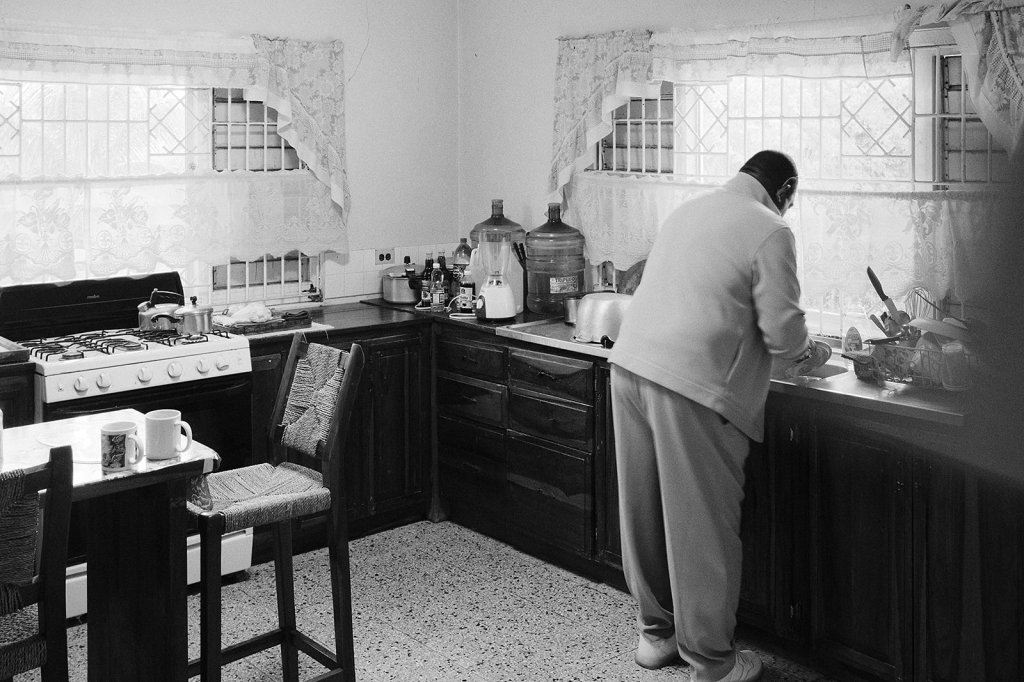
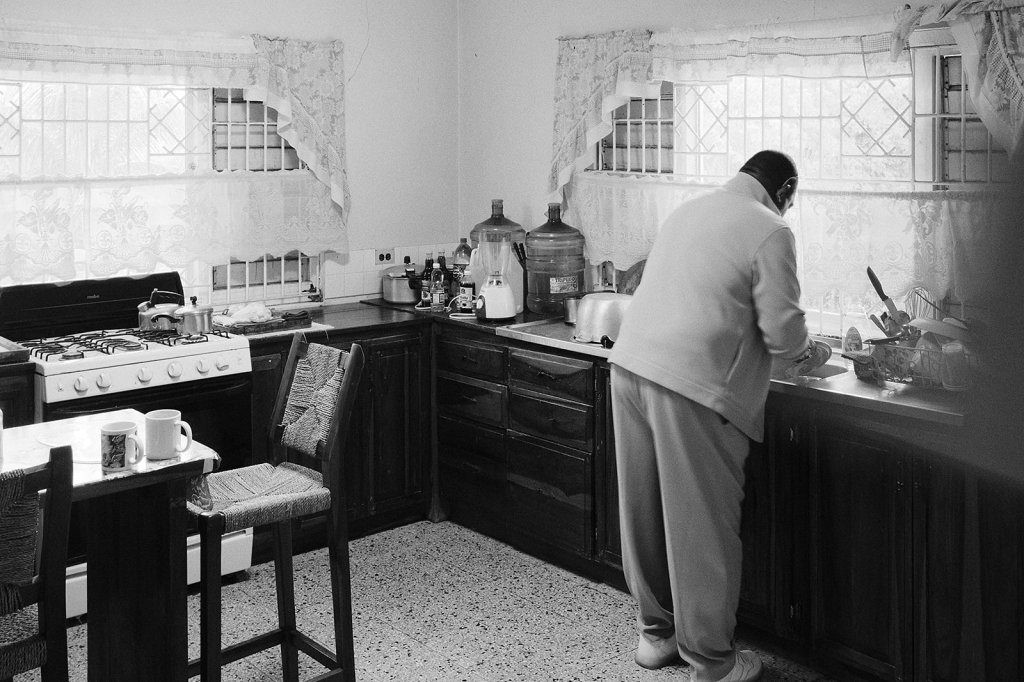
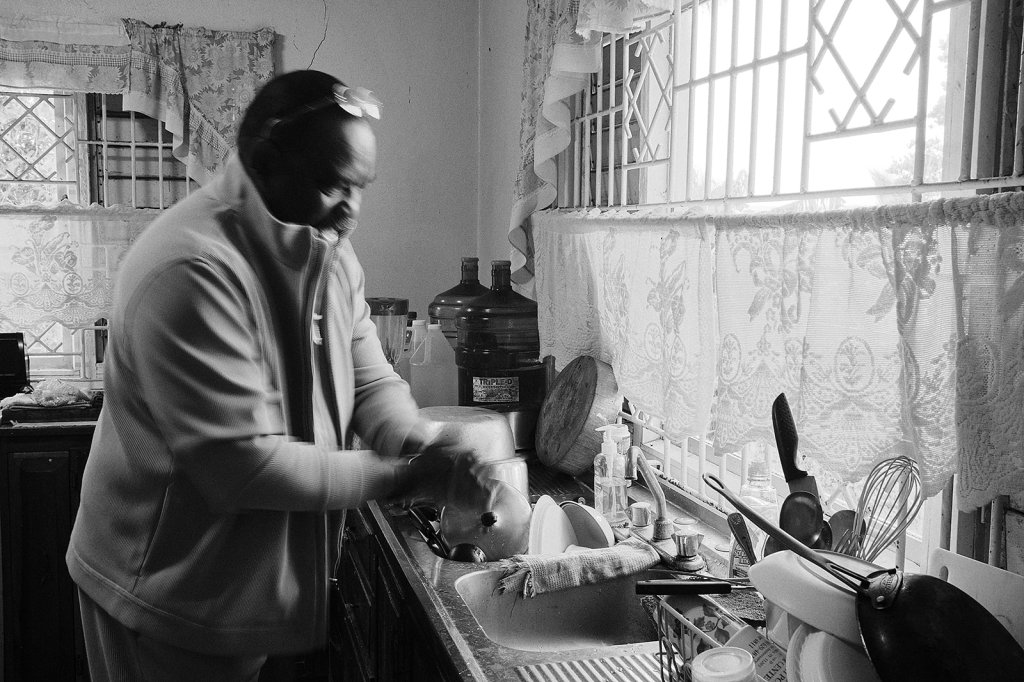
At 2:30 a.m., Godfrey Wade peels ginger by hand in his uncle’s kitchen, the blade flashing under a flickering bulb. In an embrace of slow living, he skips the blender and cuts the rhizome into small pieces. The 65-year-old U.S. Army veteran, once ranked 400th in the world in tennis and a chef to governors and presidents, is preparing tea for two strangers who will arrive later that morning.
In 1975, at the age of thirteen, Godfrey took his first flight from Jamaica to the United States. Looking out the window of an Air Jamaica plane, he saw a neat formation of what he later learned were baseball diamonds. Years later, he would meet the love of his life at an Atlanta Braves game, where he worked his second job, cooking for hungry fans at Truist Park.
Fifty years after that flight, on February 5, 2026, the United States government put Godfrey Wade on a plane back to Jamaica.
“I created my paradise in America,” he says.
For now, this will have to do.
Noncitizens have served in the United States armed forces since the nation’s earliest days. In fact, adult males under 26 must register with the Selective Service (draft) to legally reside in the US, regardless of citizenship. As a result, immigrants are overrepresented in the ranks and provide a critical bolster to American forces in war and peacetime. Army recruiters routinely tell their audiences that citizenship is automatically conferred upon enlistment. Godfrey Wade is not the first US veteran to have been deported, despite past presidential directives instructing the Department of Homeland Security to consider veteran status in removal cases.
The measure of a man lies mostly in the in-between, not the bookends, but it is important to understand the context of Godfrey before the fifty-plus years he spent in the United States. He was born in Kingston, Jamaica, and raised by his grandparents until he emigrated to join his mother. His early years were marked by a militant sense of order: a mother who would never say hello to him on the street unless his school uniform was as neat as it was when he walked out the door, and a grandfather who would hand out lashings to everyone if he felt a bit of grit under his feet after the floors had been swept. A regimentation grew within him, shaped by years of love that hid behind exacting standards. These standards formed the jigsawed edges of a man who would fit perfectly into Army life.
On a soccer scholarship in Florida, Godfrey played in a scrimmage against West Point and longed to be part of that coordinated physicality, that precision. Once enlisted, he was fixing his fellow soldiers’ uniforms, ensuring they conformed to appearance standards, sometimes to the detriment of his own punctuality. He read the rules so well that he knew every stylistic modification he could make to his uniform without being out of compliance. After the Army, he studied apparel engineering and became a fashion designer before leaving that business in South Beach to pursue the woman who would become his wife and the mother of his children in Georgia.
How does an ardent rule-follower who risked life and limb for a nation often held up as the flag-bearer for human rights end up on a plane back to a country he had not seen for thirty years? That he had not lived in for fifty?
America, like any capitalist empire, behaves like a blender. It grinds away, extracts what it finds useful, eats it up, and spits out the rest. Not even the people running the machine are immune to it, a reality that surfaced recently when Kristi Noem was fired.
The specifics of Godfrey’s legal case have been covered elsewhere. He was charged with “non-deportable” misdemeanors. One stemmed from a 911 call during divorce proceedings. Another was a bounced check for $450, written to renew a vanity license plate that read 2XALTHIM: “to exalt Him.” He paid the fee. The state called it fraud. He served two years of probation, and the letters informing him that his legal status was in peril were sent to the wrong address and returned to DHS as undeliverable.
Two weeks before I met Godfrey in person, we talked on the phone. He used biblical language, which I perceived as a shield against the harshness of his reality, the separation from what he describes as his own paradise, which he built in America. I wasn’t sure how to read him from a distance, but we decided to meet once he had had a chance to navigate the bureaucracy of re-establishing a Jamaican identity. This anticipation colored my journey to meet him.
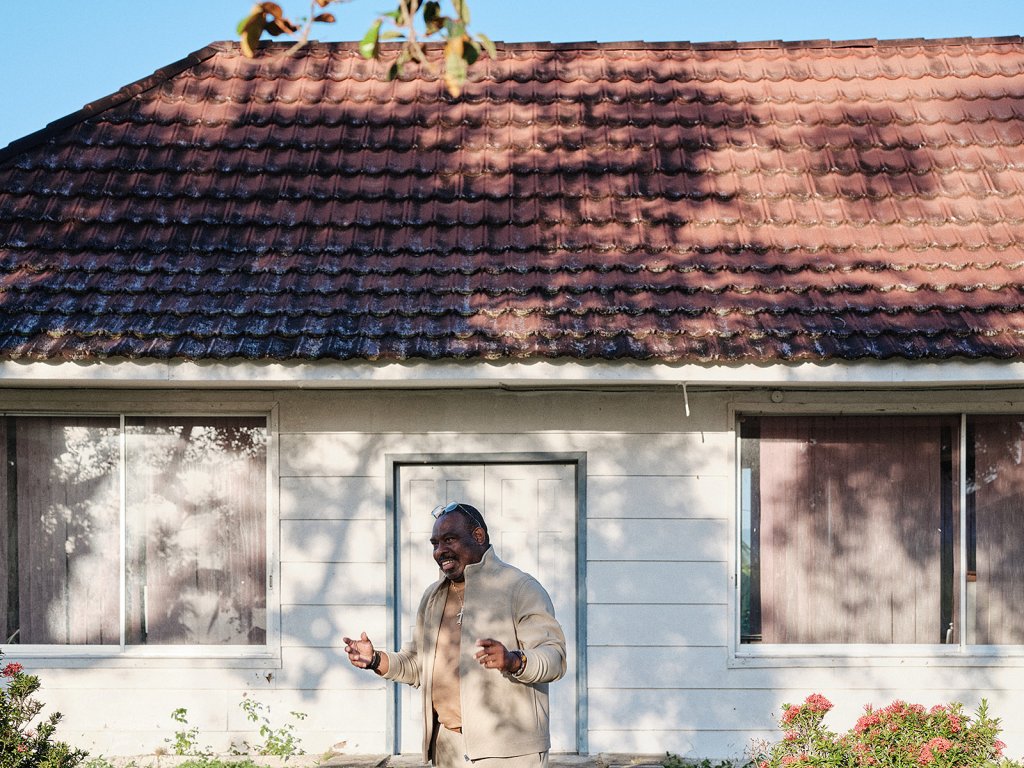
On the winding drive north through Jamaica’s interior from Stony Hill, I carried a quiet anxiety that I might not be able to relate to Godfrey, that we might not connect in the way I had hoped. As our van began to lumber up the rocky driveway between two white walls marked “Cartref,” I rolled down the window. The cool Saint Mary dew felt like a balm. The stiff morning breeze demanded that I exhale my intentions for the day ahead.
Godfrey’s dogs encircled me with friendship before I saw the man himself. I was relieved for him, and smiled to myself, knowing he had their loyalty and companionship.
He is in a strange land, but he is not alone. In fact, he had just dropped his son and granddaughter off at the airport two days before. His children are coming to visit on rotation. Over the month he has been in Jamaica, his fiancée has come to see him, and even his ex-wife, whose accusation prompted one of his misdemeanor charges, came by. His words to her: “I forgive you.”
Cartref sits in the Llanrumney district outside Port Maria, a short drive from the town center and minutes from Firefly, the hilltop home where Noël Coward once lived. The district takes its name from the birthplace of Sir Henry Morgan, the Welsh privateer who claimed estates across Jamaica’s north coast in the seventeenth century. “Cartref” is Welsh for home.
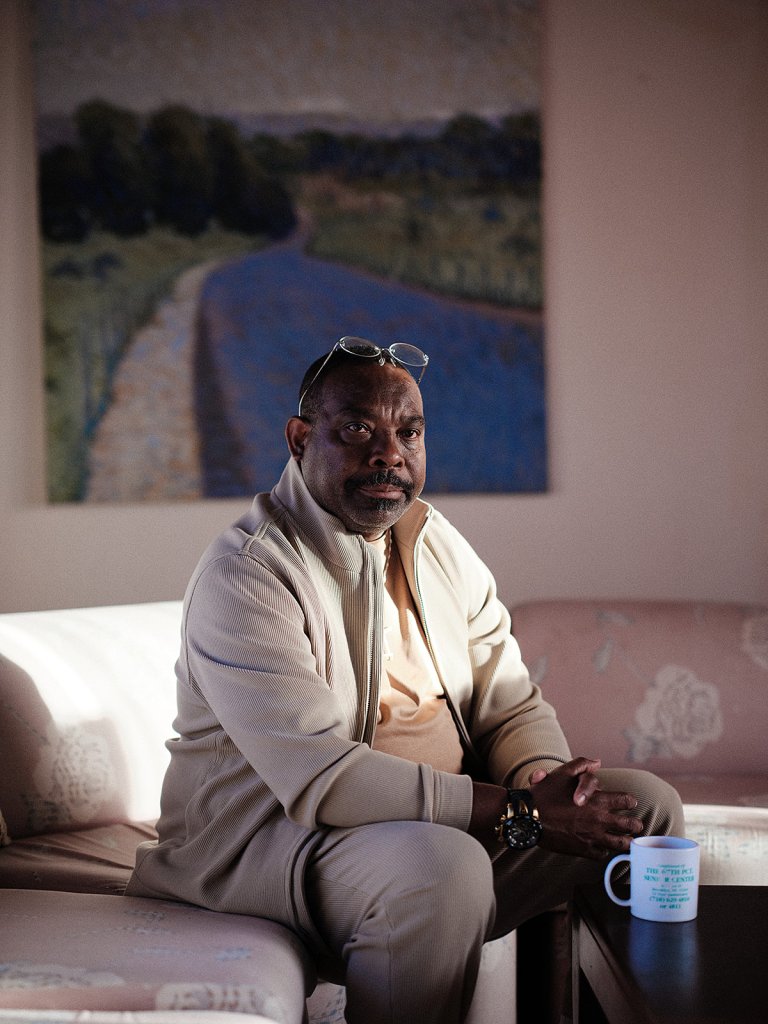
The working farm belongs to Godfrey’s uncle, Keith Curwin, who is eighty-nine and still standing strong. Keith, the first child of Vera and Kenneth Curwin, is a Kingstonian who comes up to the property as a retreat. He has taught at the University of the West Indies, run technical colleges, operated a full-service print and advertising business, and painted the canvases that hang in Cartref’s living room. Godfrey says he stands on his uncle’s shoulders.
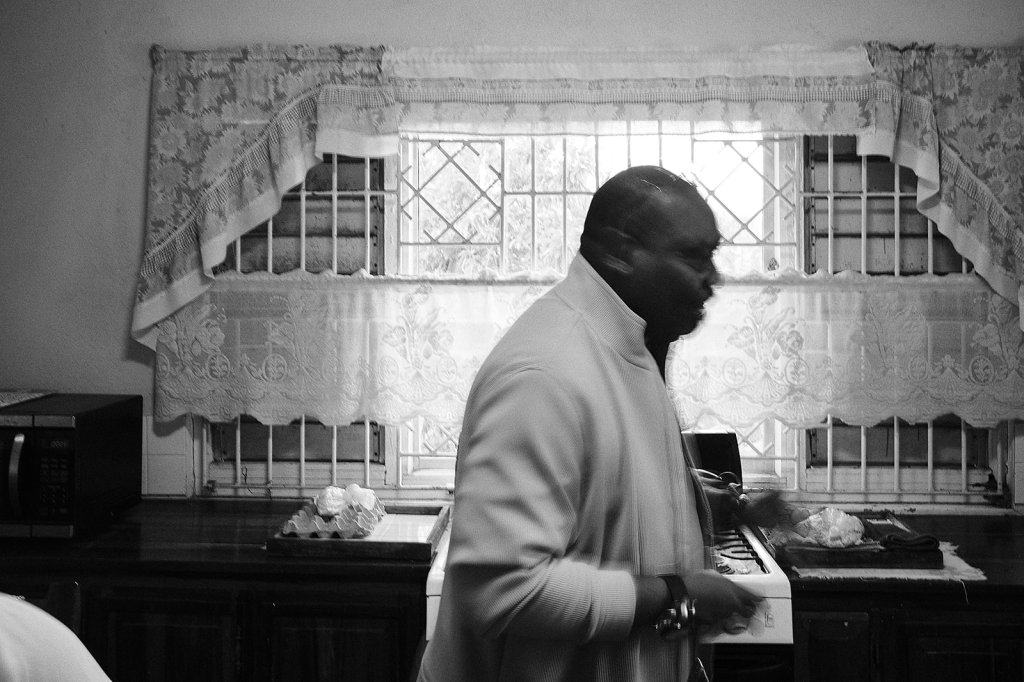
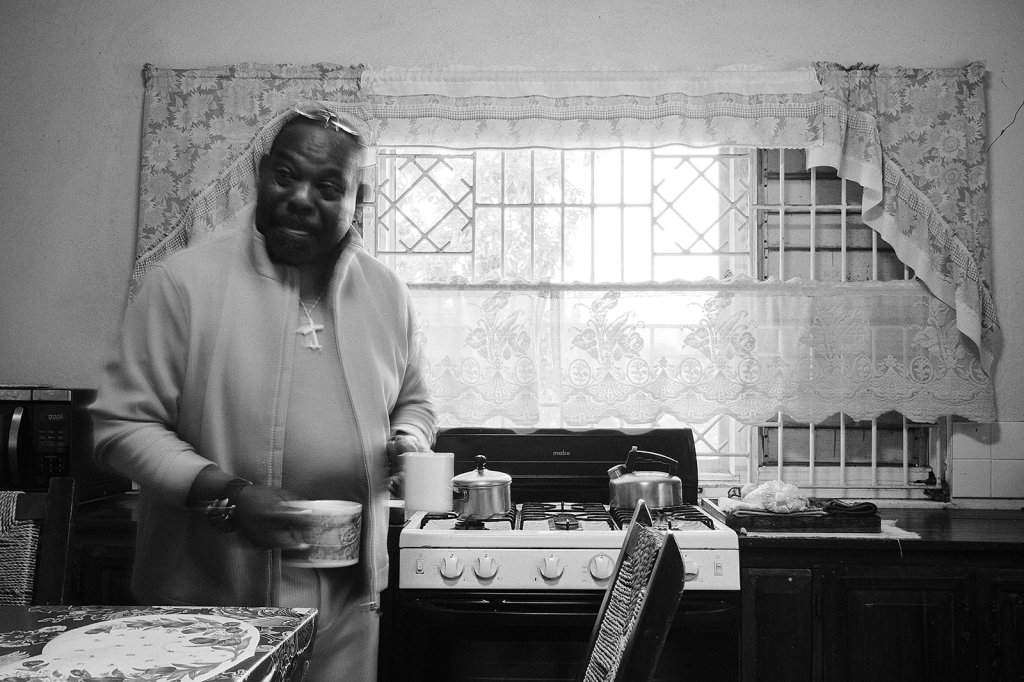
He welcomed us with ginger tea. Fresh and sharp like Godfrey’s tracksuit, no sugar. He had been up since 2:30 in the morning preparing for our arrival. A DC-based Guyanese photographer with a perch in Treasure Beach and a writer from Texas by way of the geographical center of Jamaica, two strangers pulling up to his uncle’s property to ask him to sit with his story. The tea was the first thing he offered. Before the interview, before the questions, before any of it. The man who says cooking is his love language tended to our stomachs first.
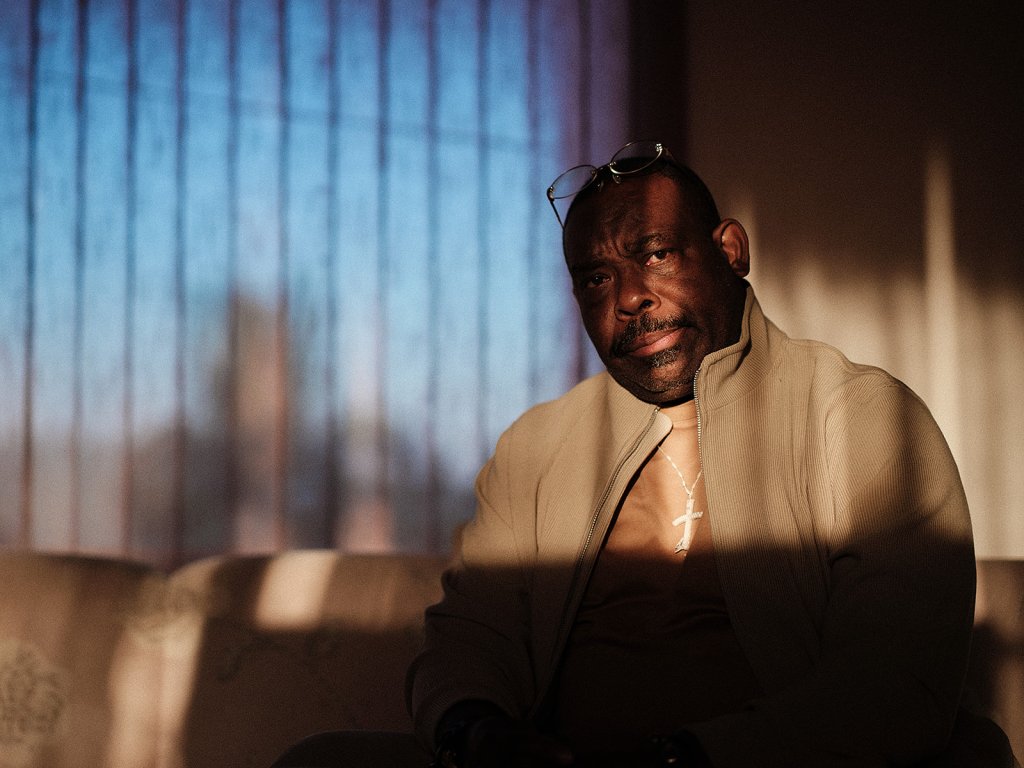
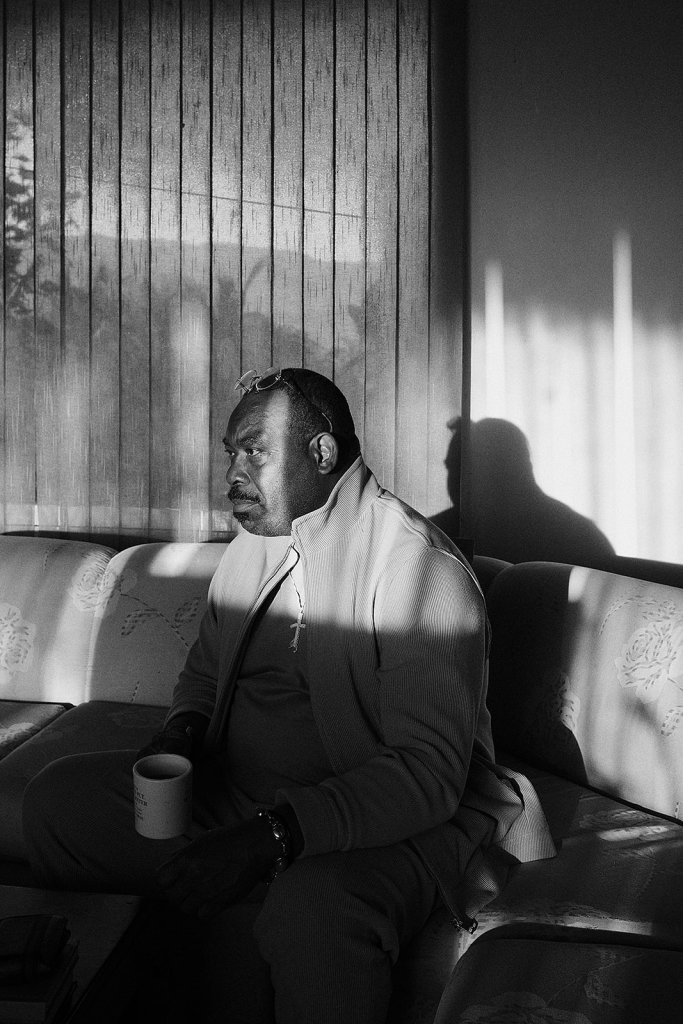
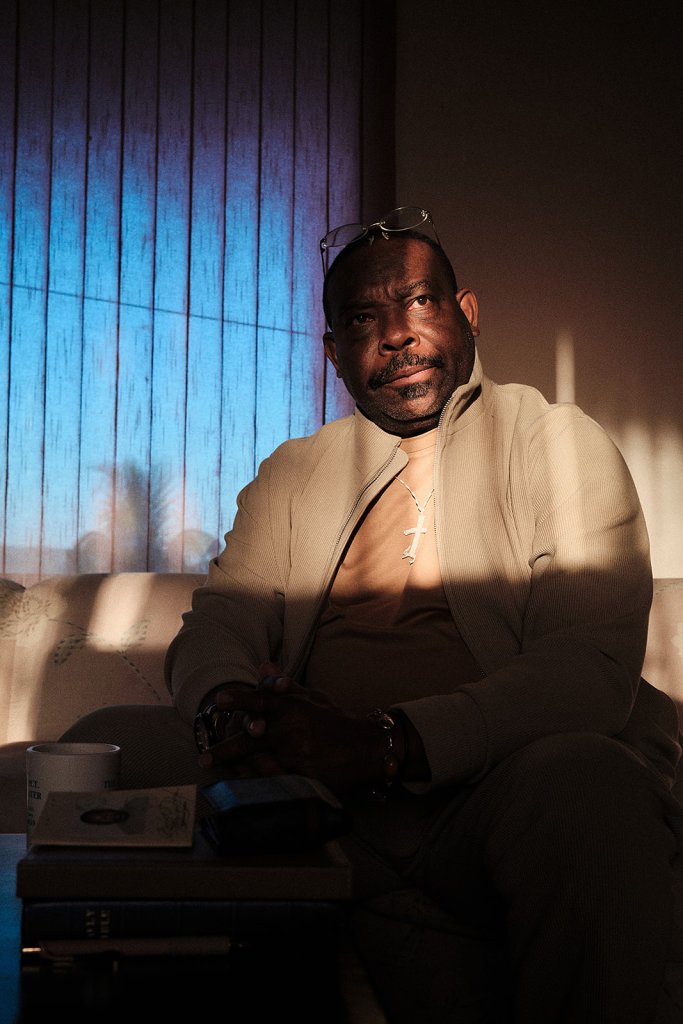
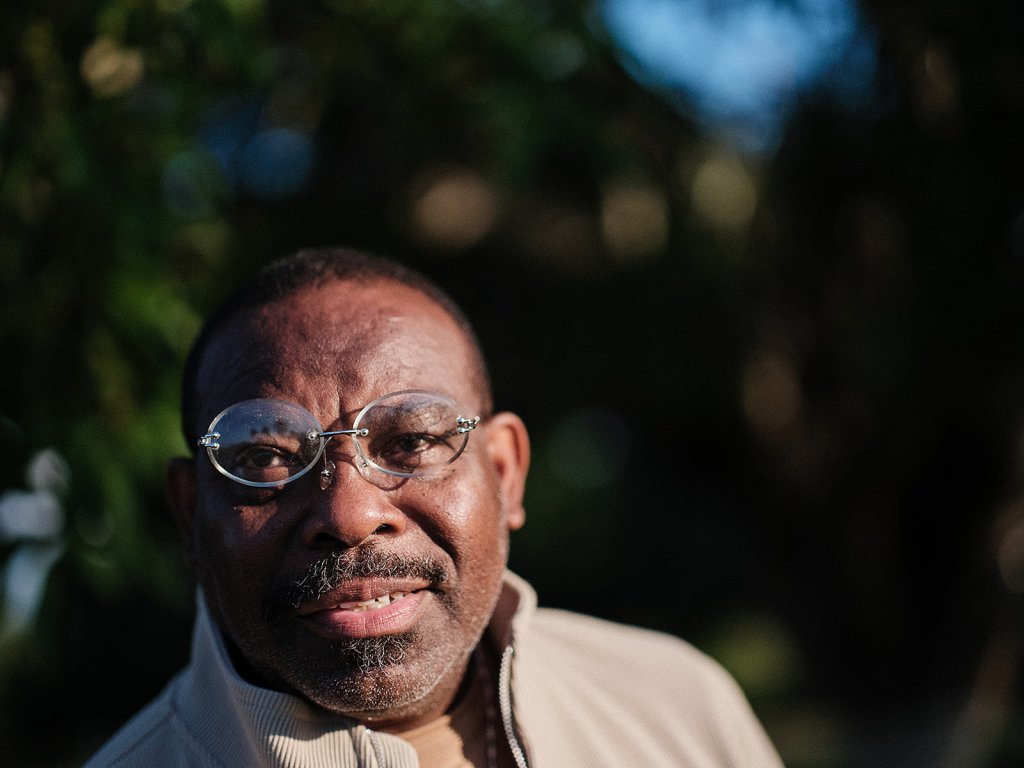
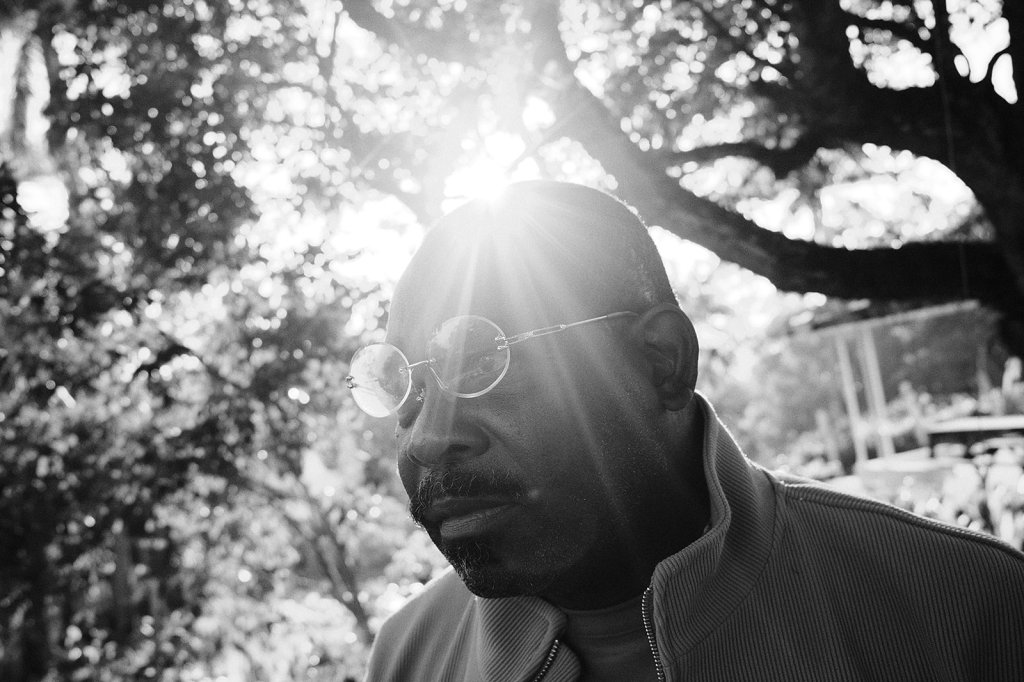
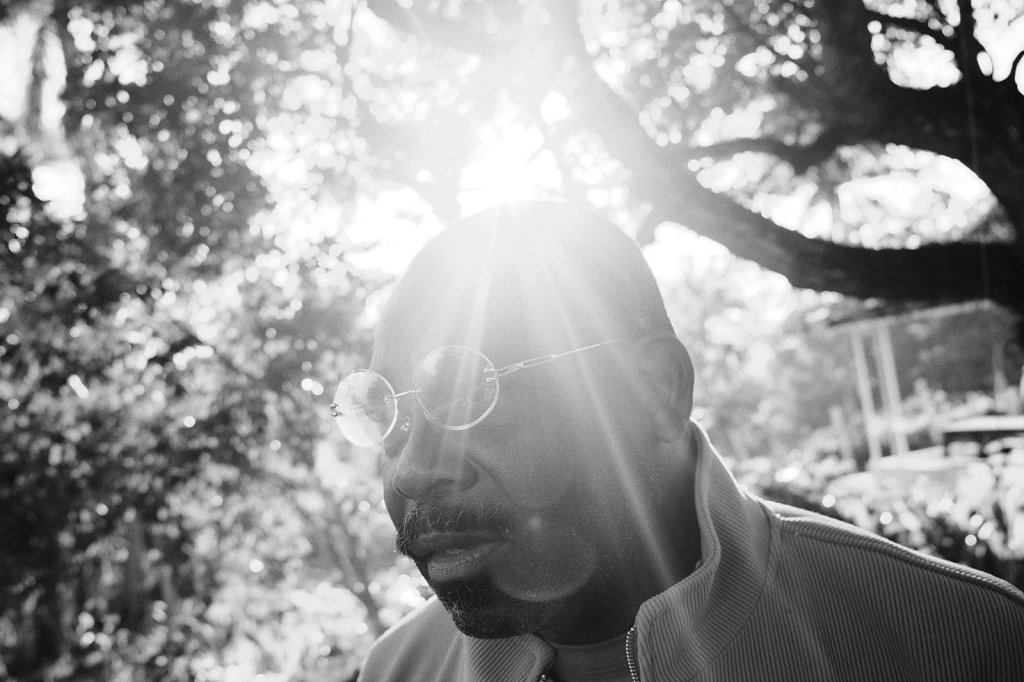
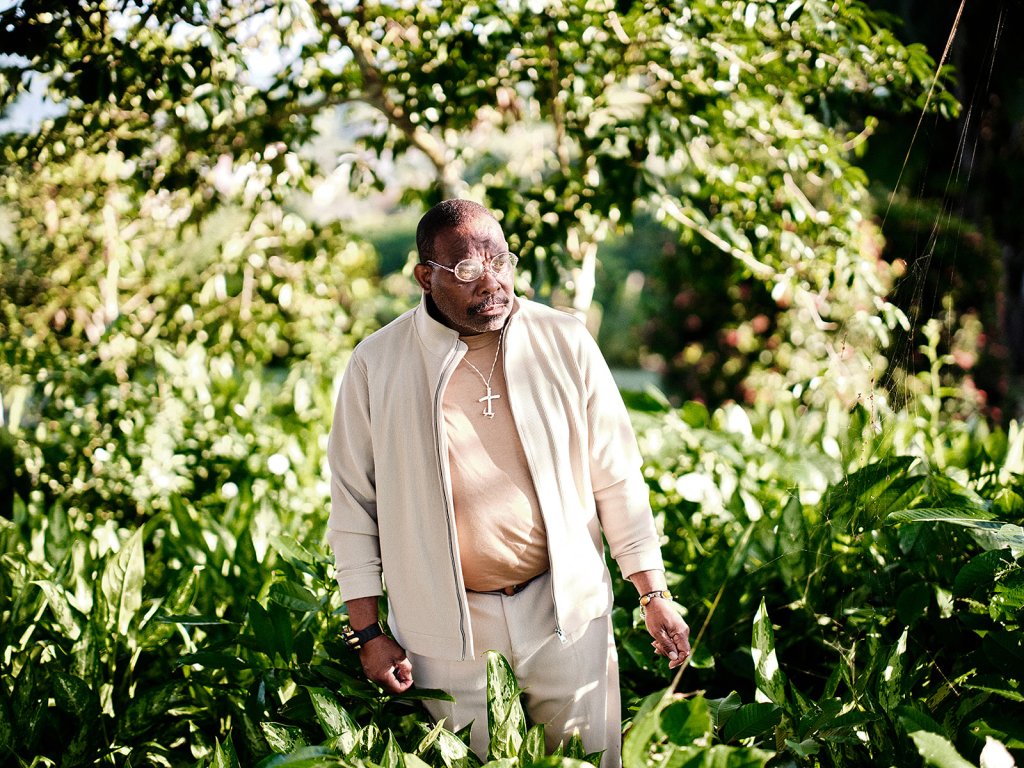
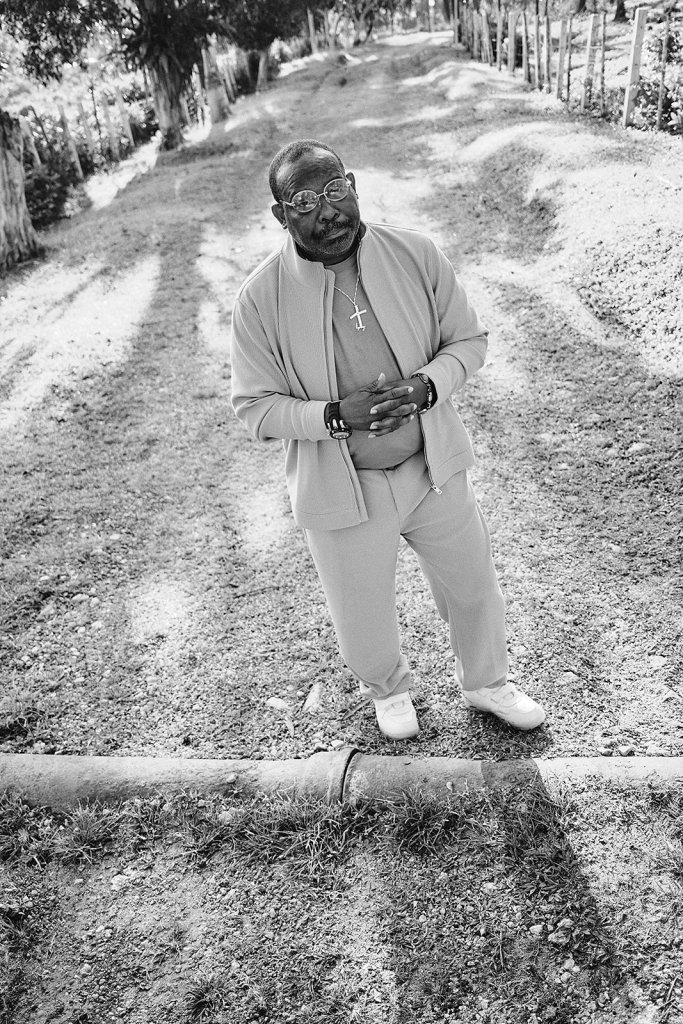
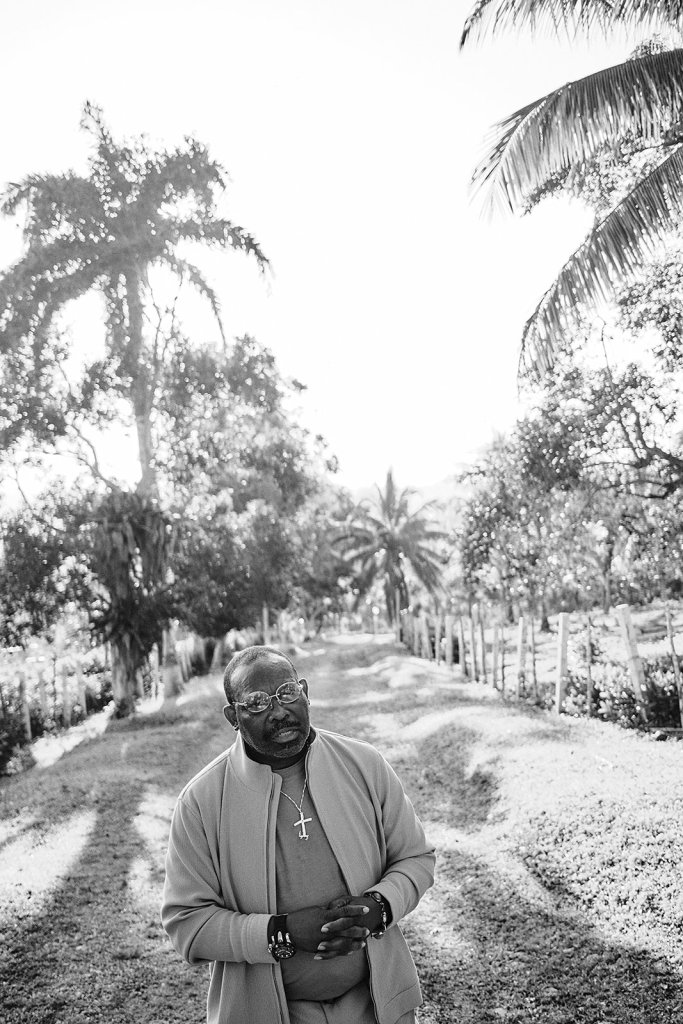
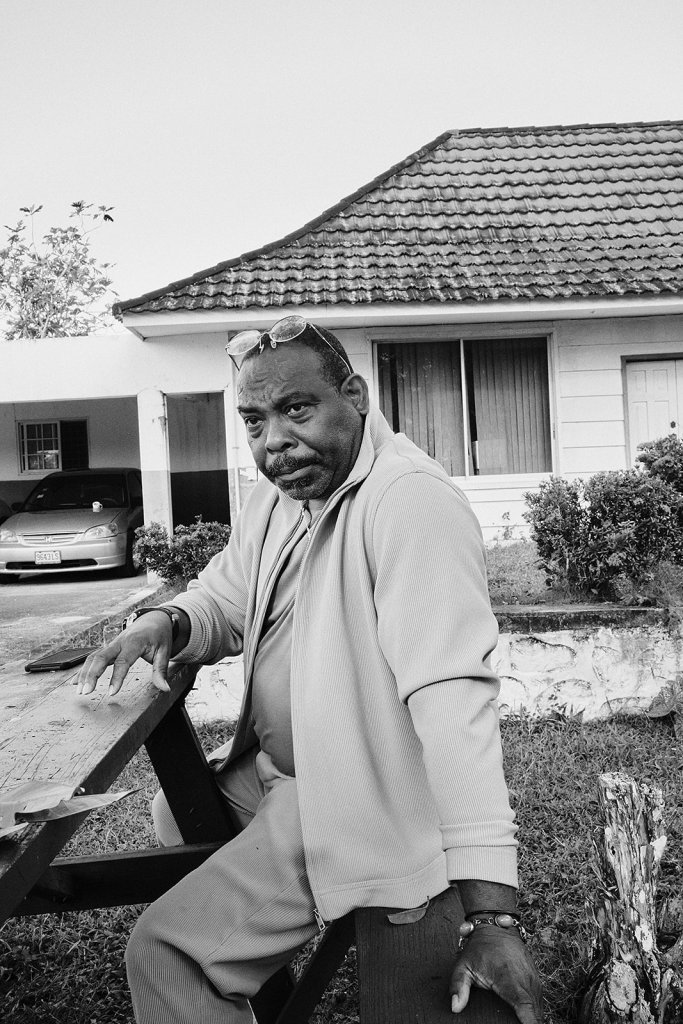
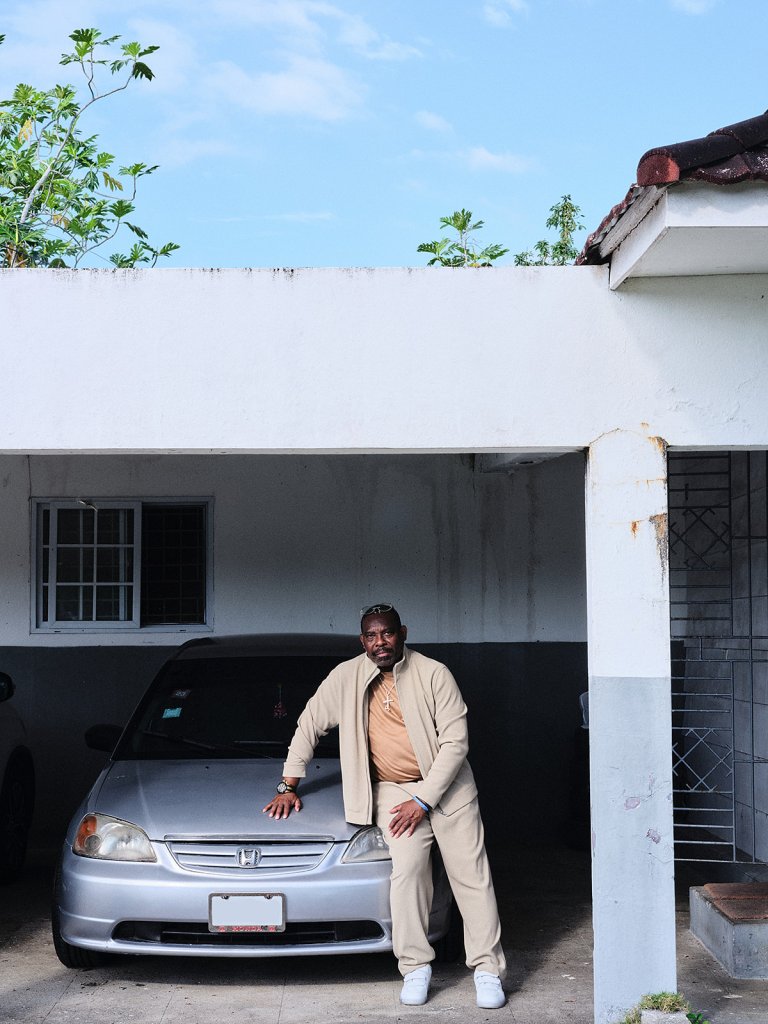
Lace valances on the windows. Burglar bars. A kettle on a gas range. A speckled terrazzo tiled floor. Cartref’s kitchen is that of a Jamaican country house that could exist in any decade. Godfrey stands before the stove in a tan tracksuit, a cross dangling from his neck, looking at me with the directness of a man who has been photographed by news cameras before and was trying to figure out if this was any different.
It was different. I told him upfront: This was not about the legal case. This was about the man.
To step back in time: before the Army, Godfrey played table tennis for Jamaica in a ten-and-under league. He enlisted in 1983, was assigned to the 7th Infantry Division, and stationed in Germany during the Cold War. During those years, he played soccer in the second Bundesliga and tennis for German clubs, becoming the number two table tennis player in USAREUR (United States Army Europe) and competing across American military installations on the continent.
He made All-Army in soccer, tennis, and table tennis. He was ranked 400th in the world in tennis. He learned to speak fluent German not in a classroom but on the courts and in the clubs, crossing between cultures with an ease that would define the rest of his life. Soldier. Chef. Fashion designer. Apparel engineer. Master tailor. Tennis coach. Artist. He held a top-secret clearance, traveled on his military ID, and was honorably discharged in 1987.
Then he built his tribe of thirteen. He designed clothes. He cooked for Governor Kemp at the Georgia State Capitol, for baseball fans at Truist Park, and for Barack Obama at a Morehouse conference. He won a golden spatula. He started a line of sea moss products—soaps, shampoos, and oils. He raised six children: Kashina, Janelle, Nikolai, Zoe, Christian, and Emanuela.
He fell in love with a woman named April at a Braves game after challenging her to a game of Scrabble. The stakes were high: if he won, she had to go on a date with him. They have played a thousand games in the eight years since. She has only won twice. April picks up on the first ring, every time, whether she is at work, in school, or at home.
On September 15, 2025, Godfrey Wade was pulled over in Conyers, Georgia, for failing to use a turn signal. Five months later, on February 5, 2026, the United States government put a man who had given them fifty years on a plane to Jamaica.
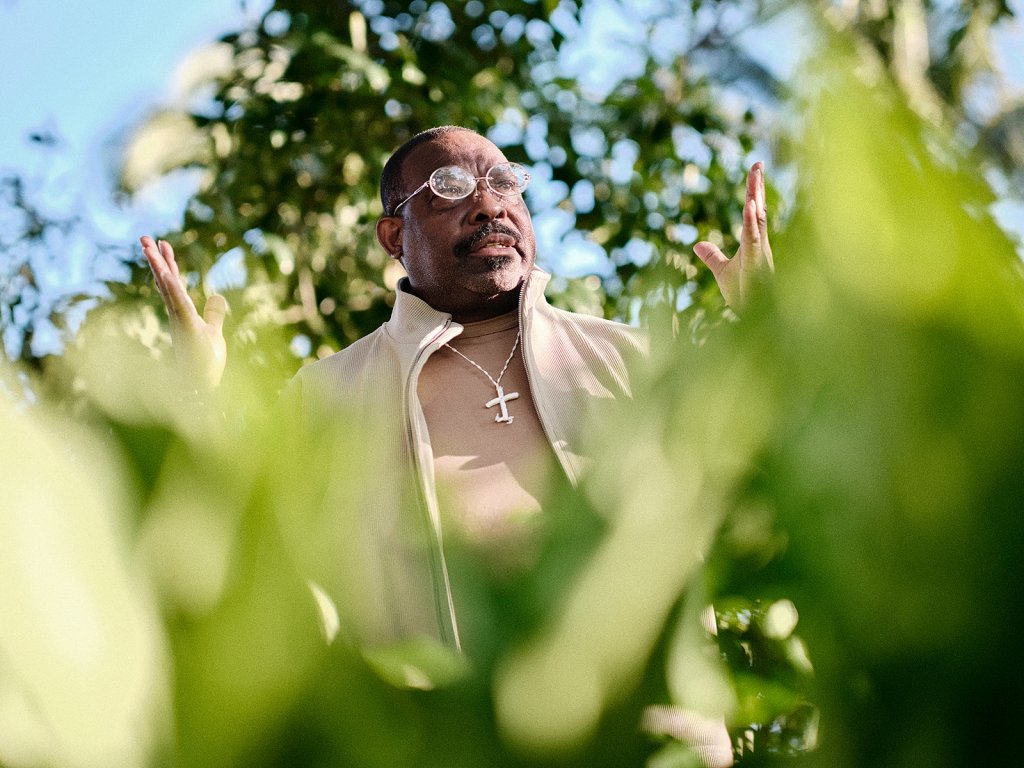
Godfrey once found Jamaica too slow. When he would visit, and he hadn’t been back in thirty years, not since 1996, he moved a mile a minute, and the pace felt like an insult to his velocity. “There’s 168 hours in a week,” he told me, “and I can run 90 to 110.” He had a Porsche at twenty-six. He outran his own fuzz buster on the highway to Naples.
But detention stopped the engine. “Somebody like myself who is an overachiever, six months is a lot of time to be sitting.” Five months of his children driving three hours to talk to him for one hour through a corded phone with plexiglass between them. Those five months ended with a respiratory illness that is still lingering weeks later, but he never utters the word sick. “We say we’re going through a healing.” His children use the same words. It is a vocabulary he built for them, a refusal to let language yield to illness or any negativity.
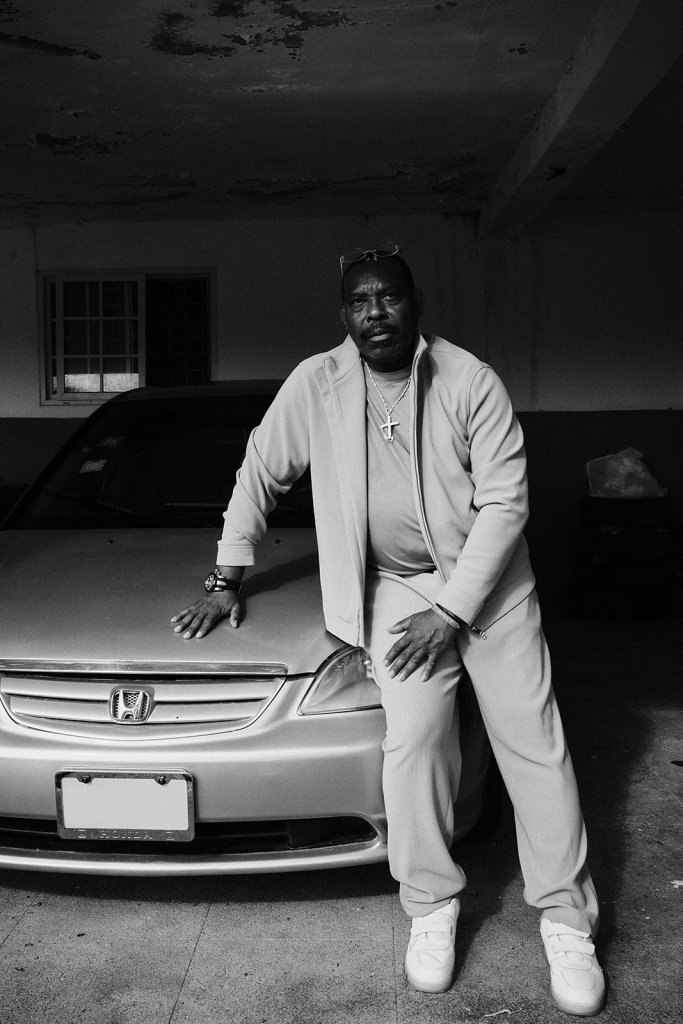
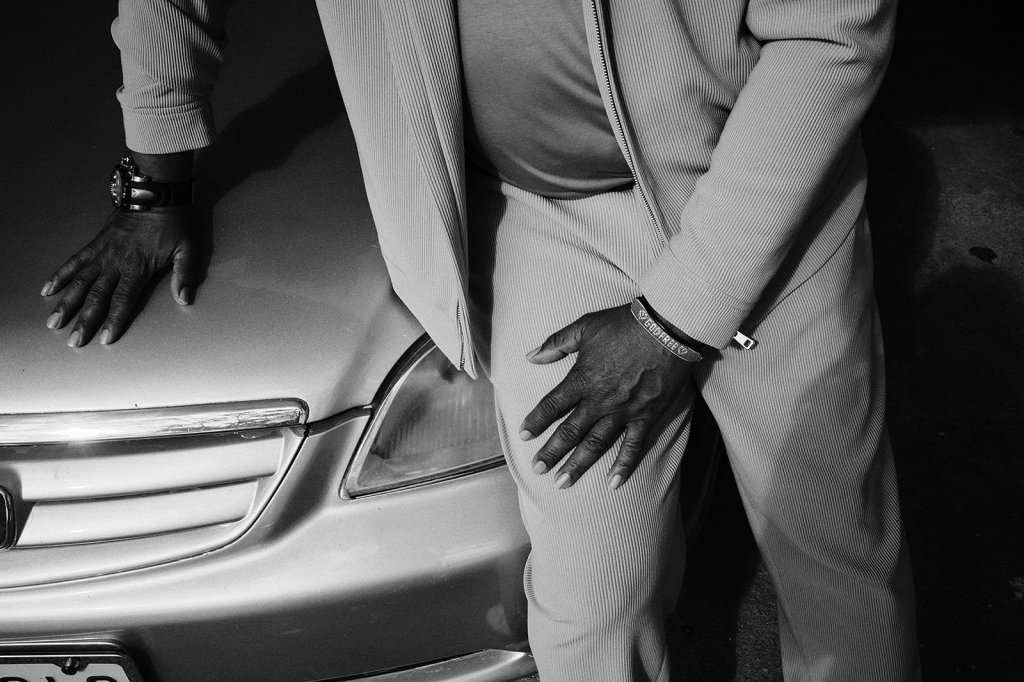
And now he’s at Cartref, where the Jamaica Hope cows are grazing somewhere out back, and nobody can seem to find them. The Honda Civic that belonged to a dead cousin, which he is making, in his words, “sexy,” sits in the carport. The kitchen where he practices his love language at 2:30 in the morning, because that is who he is, Godfrey always has a pot on the fire.
He is calling the slowness he has been thrust into “the perfect unstorm” — everything going still, all at once. For the first time at sixty-five, the man who ran 110 hours a week is learning that slowing down is not failure.
Every morning before dawn, he stands on the back verandah. The pool next to him is empty. He fills it with Le’Andria Johnson’s “Jesus” playing from his phone. “I like taking prompts from the heavenlies,” he told me. “Spirit everywhere.” He sets the tone of his day with praise and worship because he doesn’t want a driven life. He wants a directed one.
“Nobody can really steer me off course,” he said, explaining to us that his time is by appointment only. “I wouldn’t get a random call and say, well, guys, we going to Treasure Beach today.”
Midway through our interview, his phone started playing Jesse Jackson’s 1984 speech to the Democratic National Convention in San Francisco: “My constituency is the desperate, the damned, the disinherited, the disrespected, and the despised.” Godfrey paused to listen. Jackson’s words hung in the air for a moment, spirit echoing strangely across decades and distance.
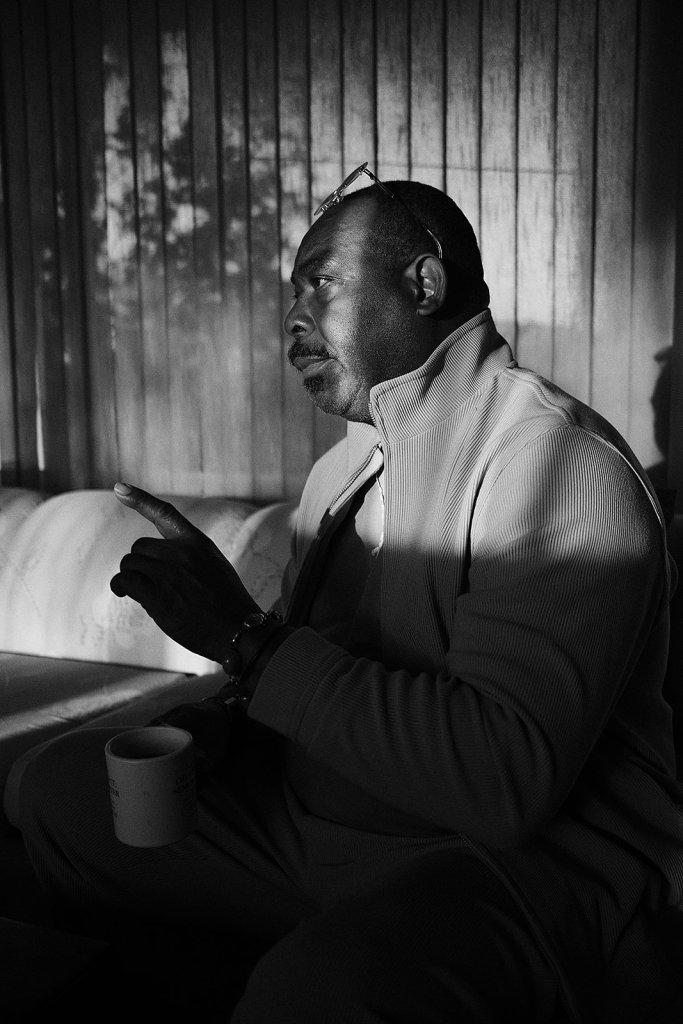
Godfrey’s life is one of writing new traditions. He kept his six children away from extended family until they were old enough to manage their own mental landscape. “I wanted to kind of insulate them from the traditional Jamaican upbringing type of something.” He was trying to be diplomatic about it, so I pushed him to be more open. That’s when he shared details of his mother not embracing him in public if he wasn’t neat as a pin, and phrases he would hear a lot as a youth. “Things like, you know, ‘good for nothing’ don’t work for me. ‘One day you’re going run across the street, a car is going to lick you down.’ ‘You’re just like your father.’ ‘You’re just like your mother.’ Those things don’t work for me.”
When Godfrey talked about insulating his children from the words that diminish, I recognized the architecture of my own departure from Jamaica. There was a circumspectness expected of me, a neurodivergent daughter who couldn’t always deliver it, and many of those phrases were familiar. While I disappeared into my ex-husband’s life and stayed away for a long time, Godfrey kept his children close and built armor around them. He’s back on this strange soil, not by choice. I’m slowly reclaiming Jamaica, with my own kind of intention. Both of us are standing in the place where the voices said we weren’t enough, both of us with a pot on the fire.
Godfrey corrected me when I said he gave his children protection. “Protection means they’re going to be gobbled up. Insulation is like creating a cocoon. A buffer. Before you traverse into the coldness, you put on your jacket.” He never told them anything that would kill their spirit. He corrected them from a place of love so total that when his son Zoe heard his grandmother invoke duppies, the boy said, “There’s no such thing. To be absent from the body is to be present with the Lord.” The armor held. Zoe is named for the love expressed in John 10:10: “The enemy comes to steal, kill, and destroy. But I have come to give life, and life more abundantly.” Godfrey didn’t just name his son. He personified a prophecy.
The love is mutual. His children frequently drove three hours from Atlanta to Stewart Detention Facility to sit behind plexiglass and talk to their dad through corded phones. They take turns visiting him now, in Jamaica. Christian, the fifth child — the one he calls his handbag, because she is known to be with him wherever he goes, the one who is his doubles partner — is working hard to raise awareness of her father’s case. His eldest daughter, Janelle, arrived in Jamaica four days after his deportation and brought him a wardrobe of ten tops and ten bottoms. Every single piece was something he would have chosen for himself.
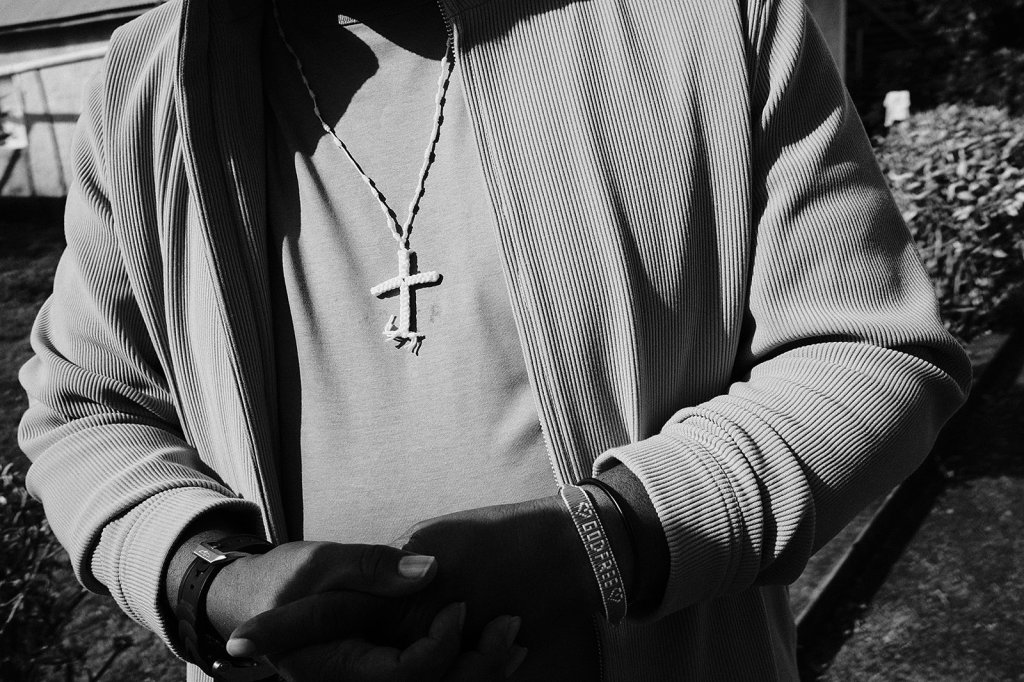
His tribe numbers thirteen, by his count. Six children. Three grandchildren: Eden, six; Irie, four; and Arnie, nearly two. Godfrey’s fiancée, April. Christian’s partner, Darius. Nikolai’s partner, Adrian. And Godfrey. He had bracelets made for all of them in detention. They were woven from discarded cookie and chip bags by men who had nothing, and sold for three dollars apiece so detainees could put a little money on commissary. Each bracelet bears a name.
His own says GODFREE.
He gave the weaver in detention the spelling himself. Not Godfrey. GOD. FREE. He made that declaration in a cage while his lungs were filling with something the facility wouldn’t properly diagnose, and his children were rotating through a visiting room where touch was not permitted.
April manages much of his affairs from Atlanta. She is currently pursuing a doctoral degree in education and leadership. She talks to him ten times a day and picks up on the first ring.
Godfrey told me both on our phone call and at Cartref that “God’s mercy outweighs his anger.” You can be wrong, you can betray, you can mess up, and love doesn’t withdraw. That’s how he raised his kids. That’s how he forgave his ex-wife. That’s the theology underneath the insulation. He is a man who has been practicing what he preaches for decades and is now having to apply it to the country that discarded him.
Detention was not a waiting room. It was a pressure cooker.
Of the eighty detainees in his pod, more than sixty were Spanish-speaking. The English speakers numbered eighteen to twenty, depending on the direction of flow through the revolving door. Godfrey called the majority “the Amigos.” The two groups coexisted in tension. There was a system where the majority could point out infractions and have a man removed from the pod. There was a word for it: “fuera,” from the Spanish afuera. Outside. The environment was volatile. Godfrey slept in bed 9 with a lieutenant in bed 8 and a lieutenant in bed 10. They called him the Colonel, and he led the English-speaking minority with military precision because the alternative was chaos.
Many detainees signed their deportation papers just to escape the harsh conditions, and they encouraged Godfrey to do the same: “Colonel, you’re going to paradise.” They couldn’t understand why he held on. He felt terrible watching them go, knowing some were signing away their rights just to breathe outside air. But he wouldn’t sign. “I created my paradise here in America,” he said. “I cracked the code.” He had built something, and the machine was asking him to surrender it with a signature.

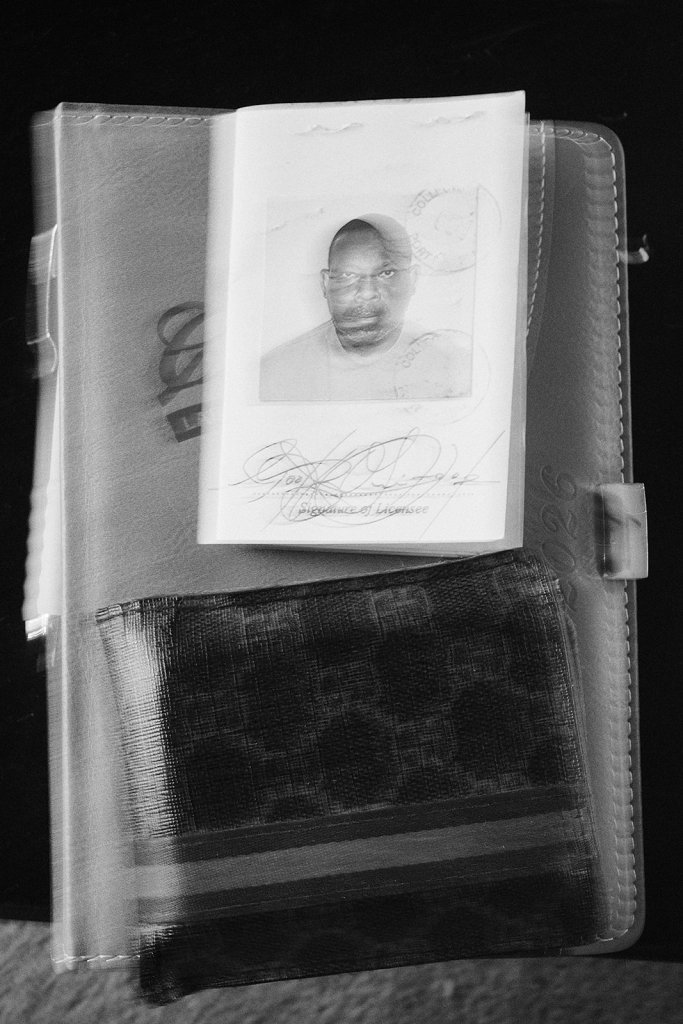
Among the detainees in Godfrey’s facility for men was a trans Latina woman named Alexa. She was in the facility for two days before ICE released her on bond. Godfrey started drawing her portrait, but she left before he finished. The unfinished drawing is among his belongings in St. Mary, alongside pencil portraits of the men he was caged with, a religious tract titled Why Do People Suffer?, and a paperback called Wonder Boy, about the architect of happiness culture- Tony Hsieh —a strange pairing of books for a man whose life had just been turned upside down by systems far larger than himself. They sit beside a temporary Jamaican driver’s license, a folded piece of cardstock with a JP-stamped photo of Godfrey glued to it.
Four months in, Godfrey felt deserted by his military fraternity. The man with top-secret clearance, who traveled on his military ID, who had been nicknamed the Colonel because even in a cage, he could not stop being a soldier: no one from that world came looking.
Then a letter arrived. Eleven o’clock at night.
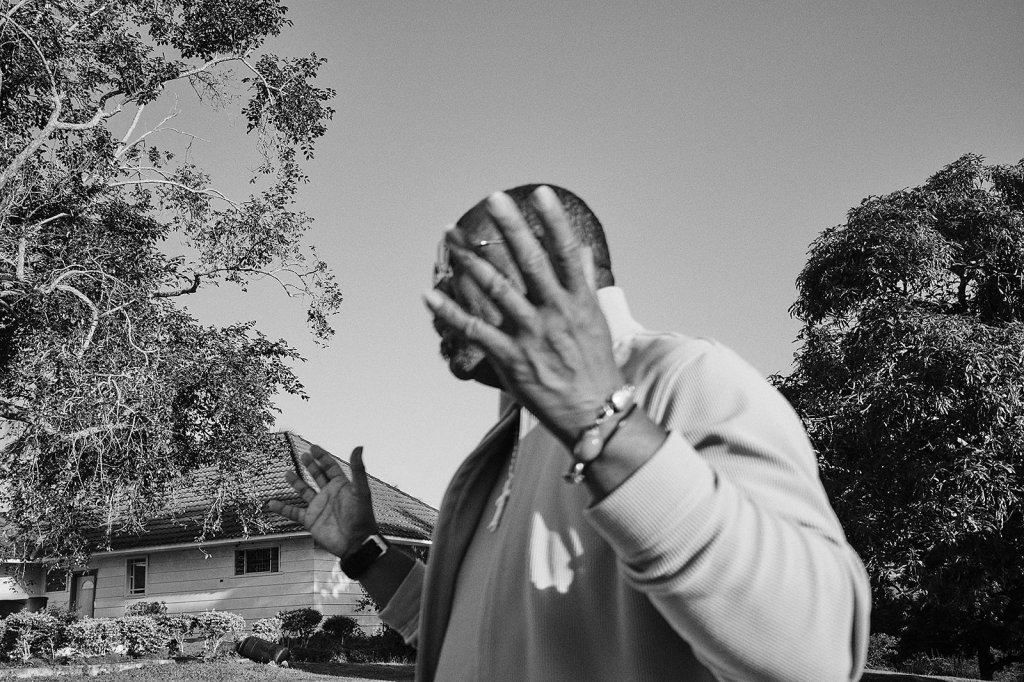
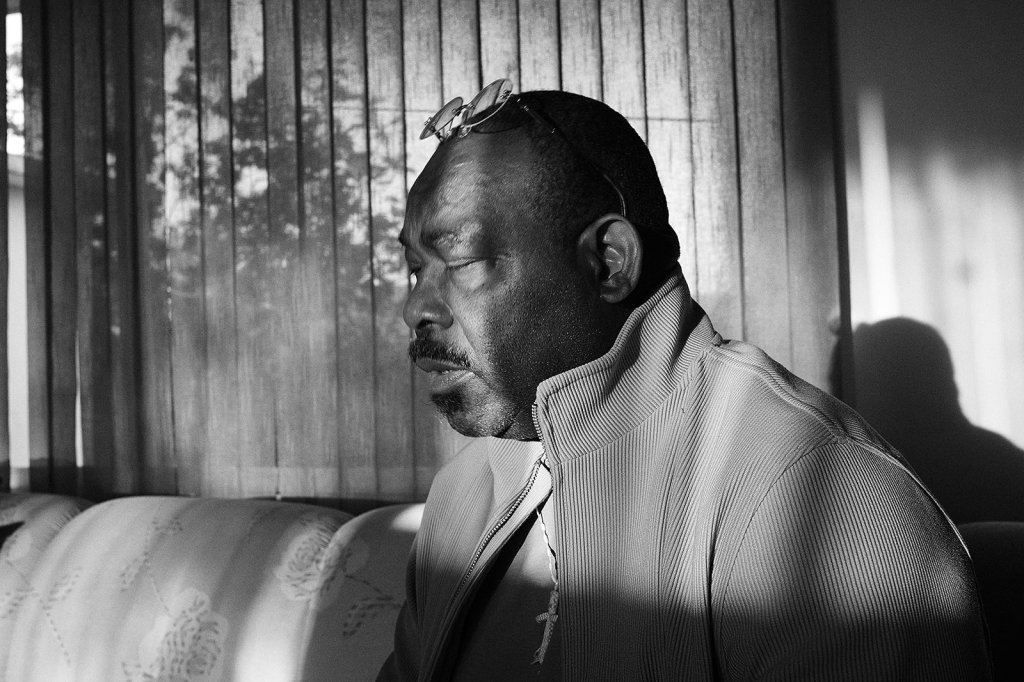
“I bawled so much,” Godfrey told me. He was sitting on the sofa at Cartref when he said it, and his head bowed gently as the memory moved through him. “The snot was just uncontrollable. It was just getting on my shirt.”
The letter was from About Face, a veterans’ advocacy organization. The next week, another letter. The week after that, a visit. A young Marine, 35, who looked 25, drove four hours with a colleague to the Stewart Detention Center in Georgia. “Amongst military men,” Godfrey said, “we have a fraternity. A strong fraternity.” But the people who finally found him were not the VA. Not his old unit. They were the dissenters, the veterans who already understood what it means to give yourself to the machine and have it discard you.
Godfrey is not an anomaly. No one knows how many veterans the United States has deported. Estimates range from hundreds to tens of thousands. As of 2024, more than 40,000 foreign nationals were serving in the Armed Forces, and another 115,000 noncitizen veterans were living in the country. In April 2025, five months before Godfrey was pulled over in Conyers, the Trump administration rescinded the, albeit loose, Biden-era policy that treated military service as a mitigating factor in deportation decisions. Volunteer organizations are currently tracking close to four hundred deported veterans abroad, men who gave their bodies to the same machine and were discarded the same way. Some die waiting for permission to return. The DHS could not provide me with any statistics. The machine does not count what it discards.
“Feel how sturdy it is,” he said. “That’s all trash.”
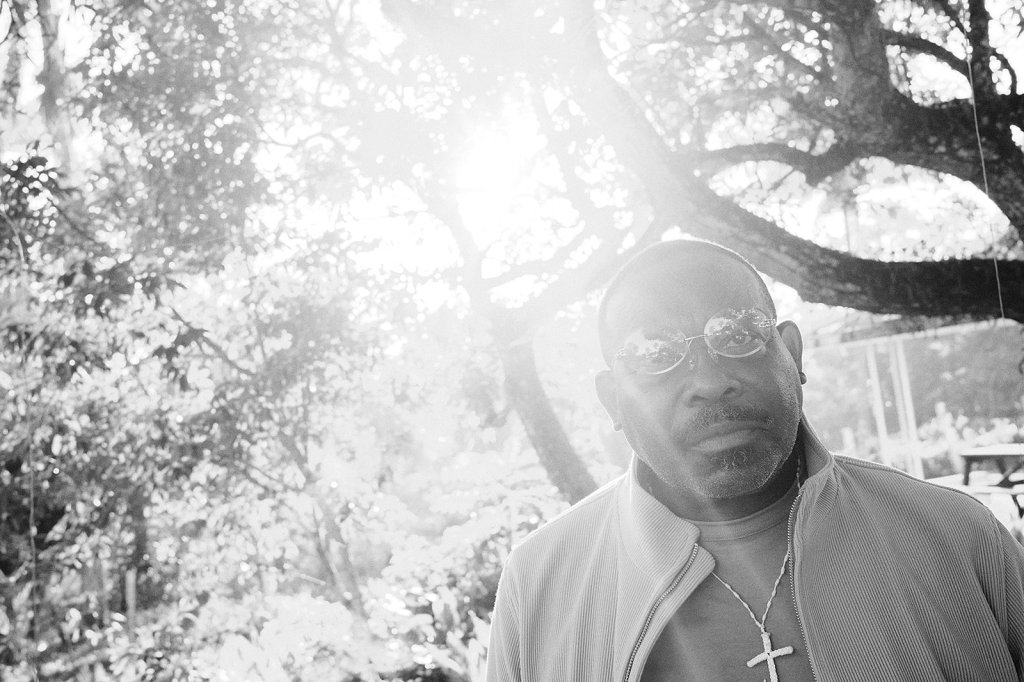
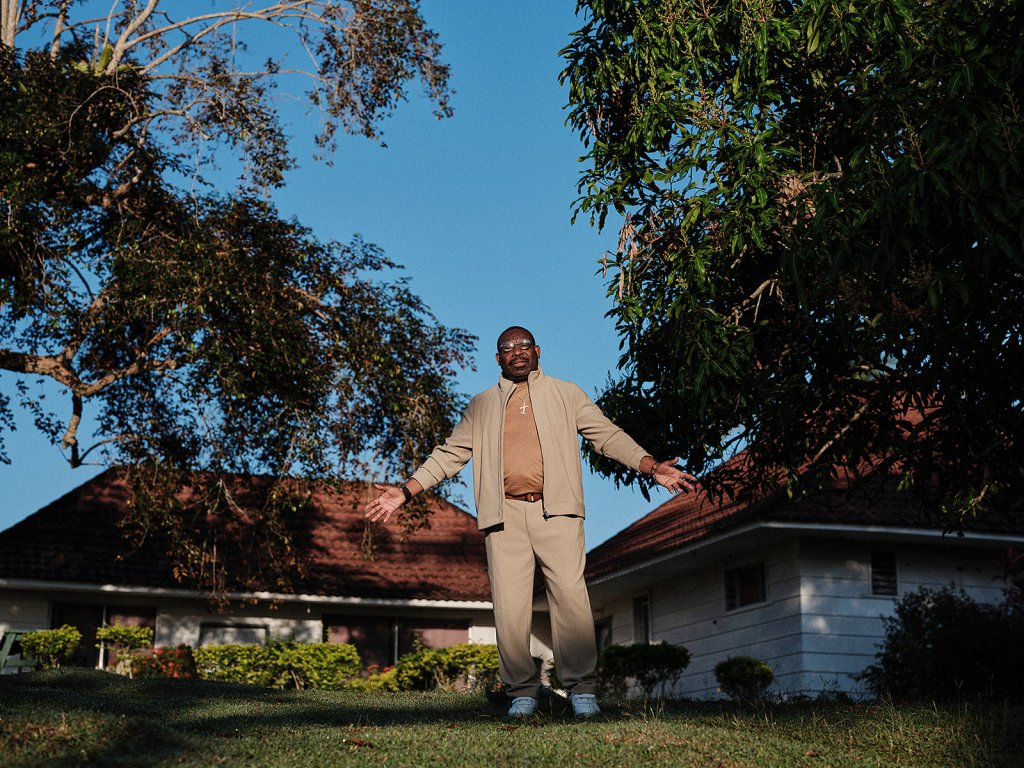
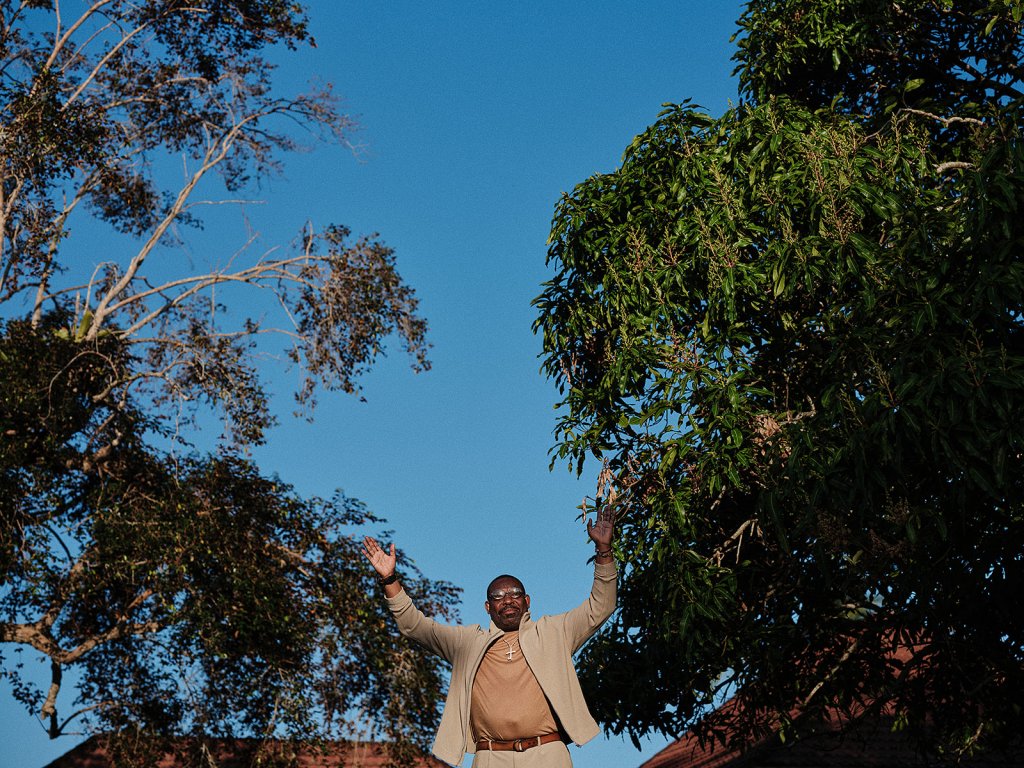
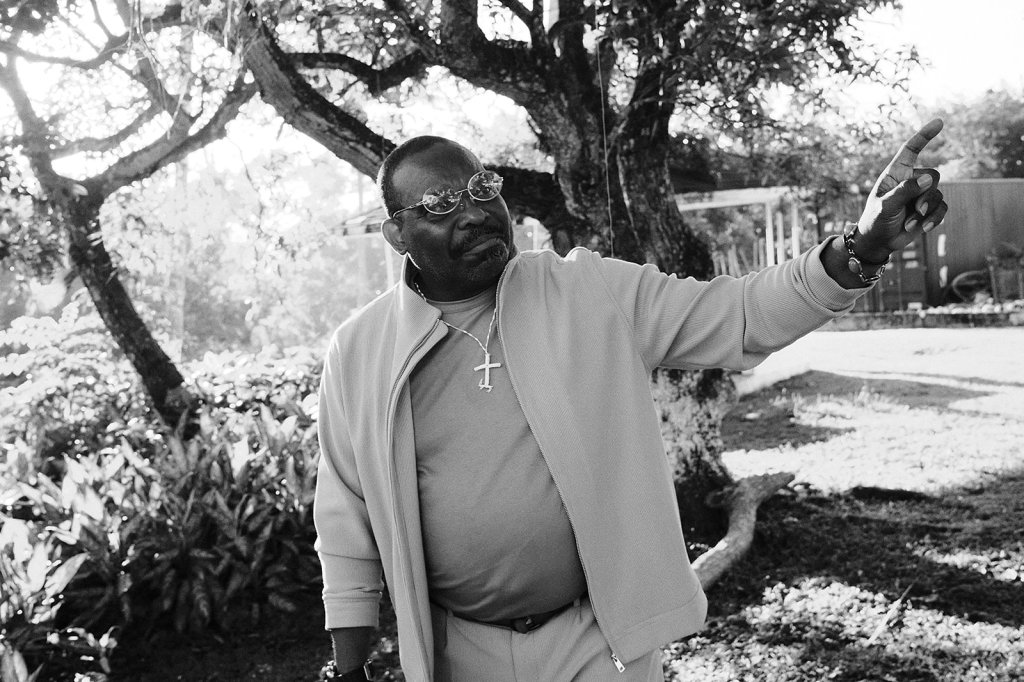
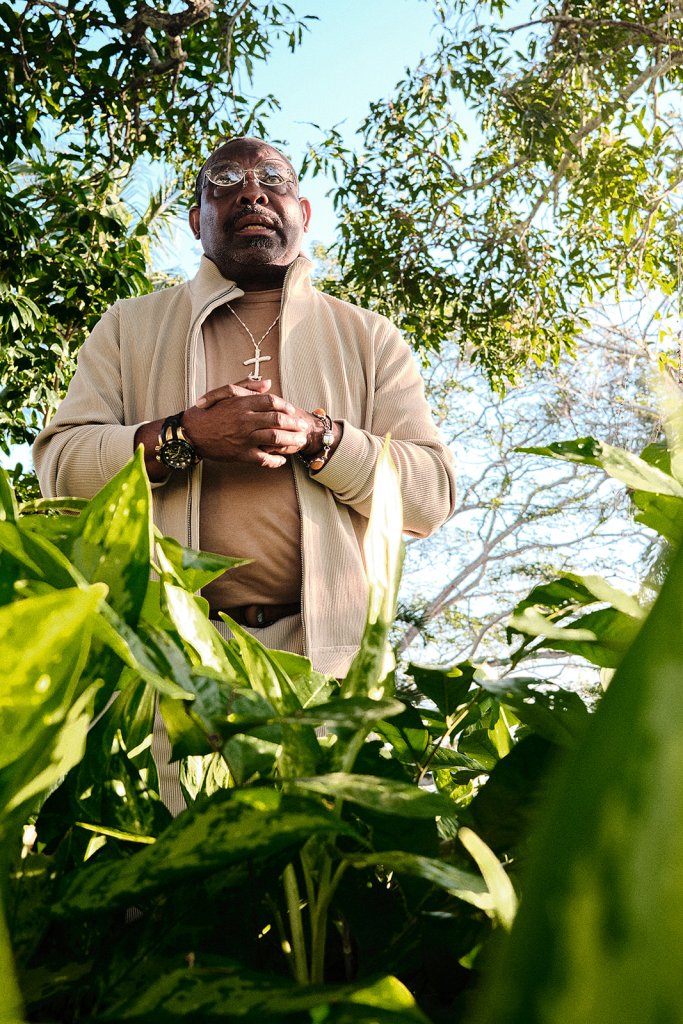
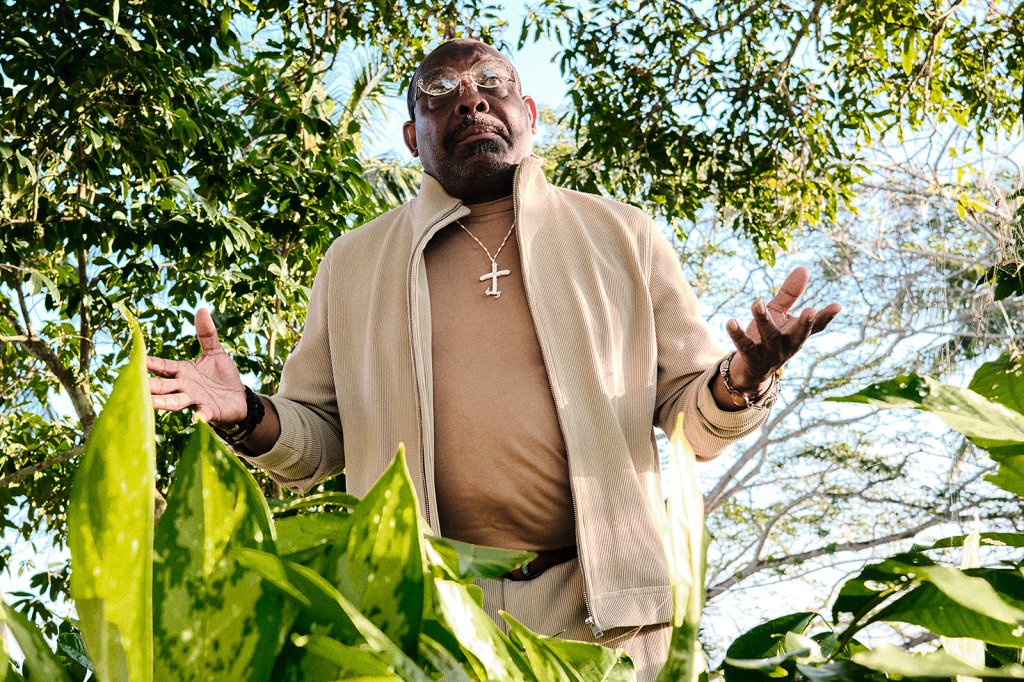
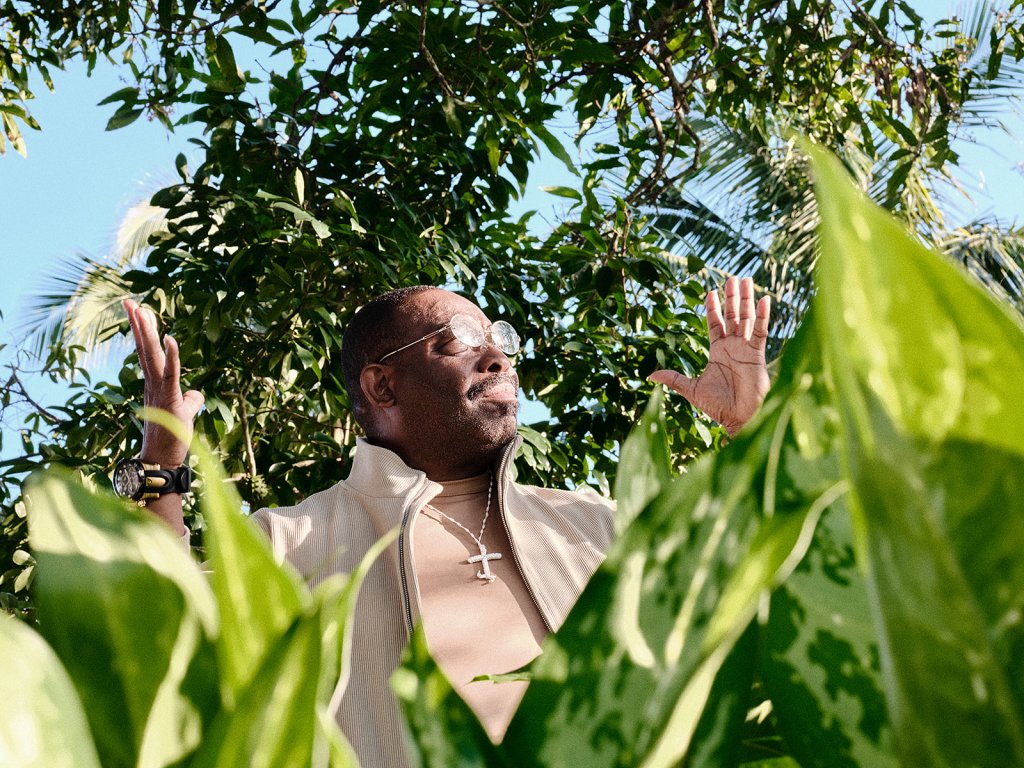
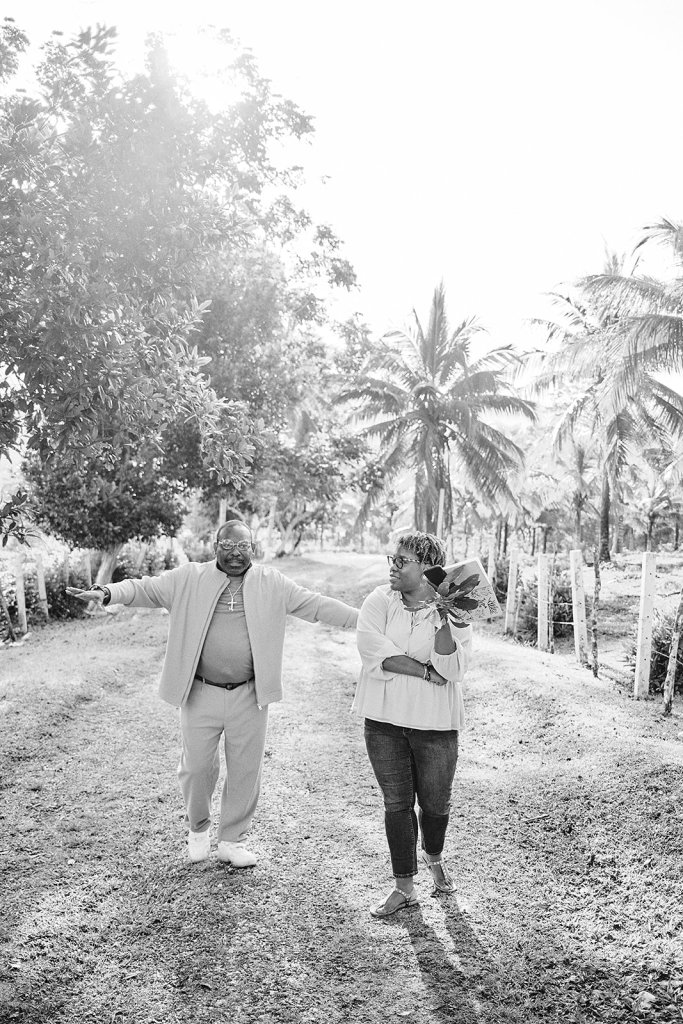
In detention, people made what they needed from refuse. Including beauty. Including faith. The cross Godfrey wears in every photograph, the one that catches the light in Kirth Bobb’s garden portraits, the one that hangs against his chest as he raises his arms among the vegetation like a man standing in his own cathedral, like the GODFREE bracelet, was made for him in detention. Not by his tribe. Not by his family. But by the Amigos. They took the refuse available to them, packaging from commissary items, garbage bags, whatever could be shaped, and fashioned a cross for a man they shared a cage with. They also made a shoe that hangs from the rear-view mirror of Godfrey’s new-to-him Honda Civic, woven from trashed bags that held cookies and chips, sold for ten dollars to be put on their commissary.
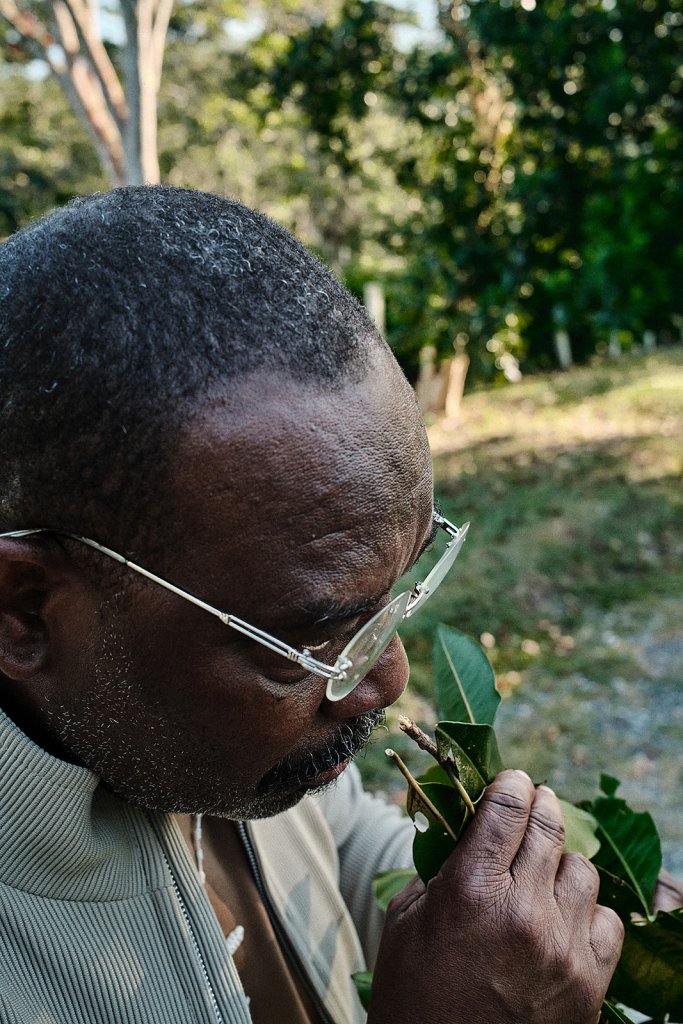
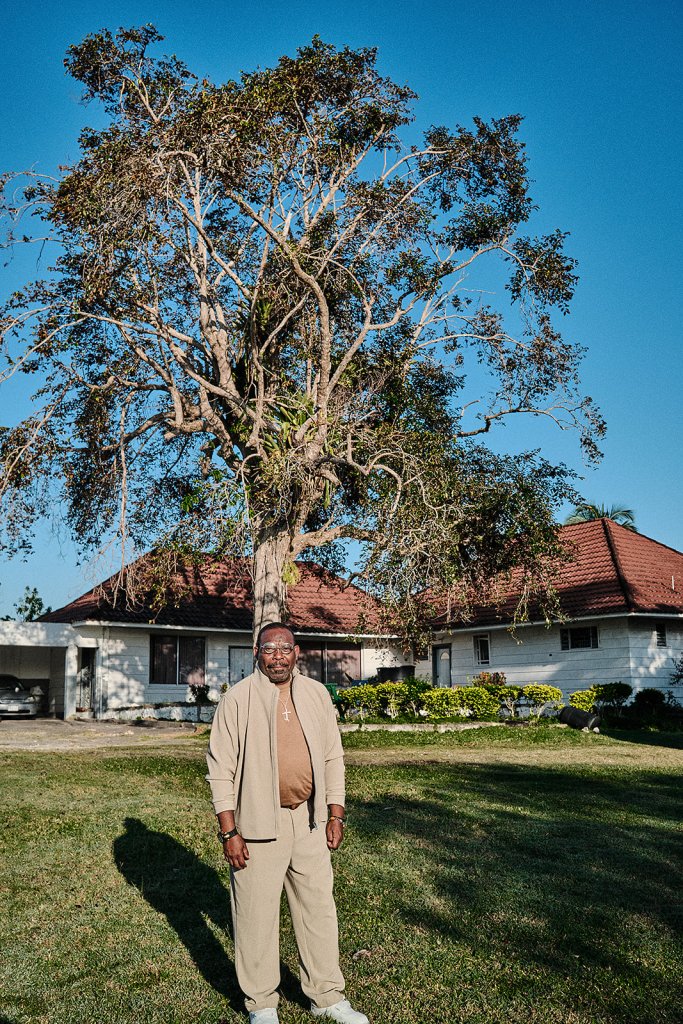
Claude McKay, writing from Harlem a century ago in his poem “Flame-Heart,” confessed he had forgotten the special, startling season of the pimento’s flowering and fruiting. Godfrey, standing in his uncle’s driveway, had never known it at all.
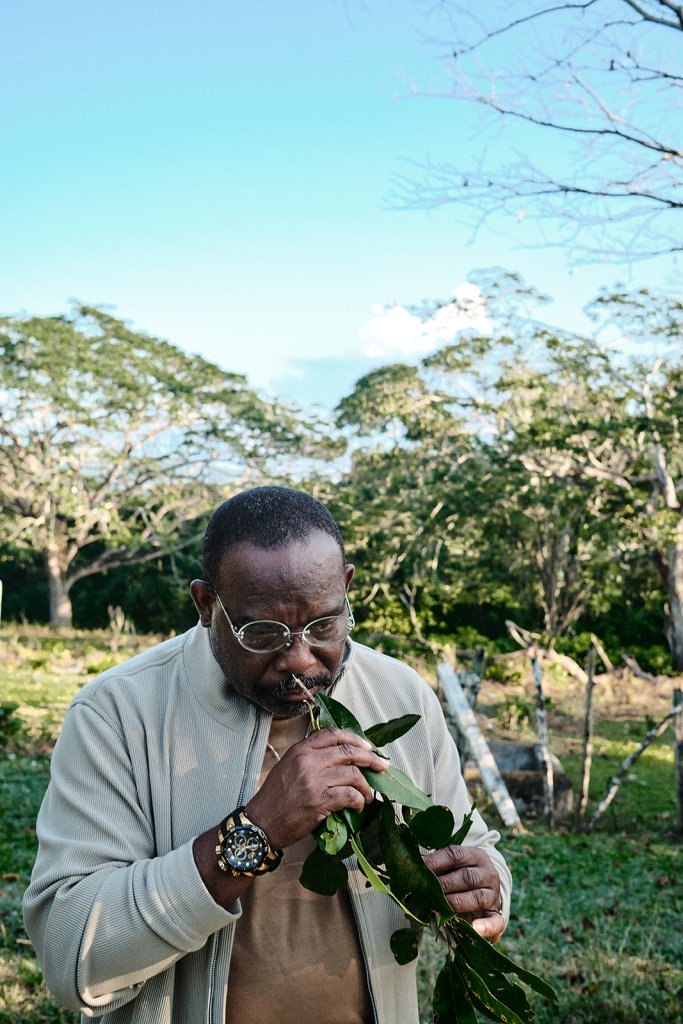
I lit up when I saw the pimento trees and asked if I could take a piece. He said, “Yeah, man. You’re family now. You can pick whatever you know.” I snapped a branchlet and handed it to him. He brought it to his face and breathed in.
A palpable pause. Then, “I never know a pimento this. You a tell me.”
The chef in him took over, the man of all things food, all things spices, smelling something he was meeting for the first time on his uncle’s land. He asked if you could make tea with it. “You are teaching me a lot,” he said. Kirth photographed the moment: a man inhaling the country that has always claimed him, whether he knew it or not.
Godfrey wants to go back to Georgia, but not because he doesn’t love Jamaica. He is learning to love it again through his senses: the salty air, the little hook of beach by Pagee in Port Maria, where he takes off his shoes and leaves footprints in the sand, where his eyes track northward, past Cabarita Island, looking for what he left in the distance.
Love requires presence, and ICE took his ability to be present. “My grandchildren. The legacy of the family is there. I need to have access to come and go. Freedom of movement.”
He needs to be in the stands when Eden plays. He needs to walk Irie to school. He needs to fall asleep on the couch in Atlanta, with tennis on the TV, his mouth wide open, while April pulls into the driveway and smells the gardenias he planted by the front door.
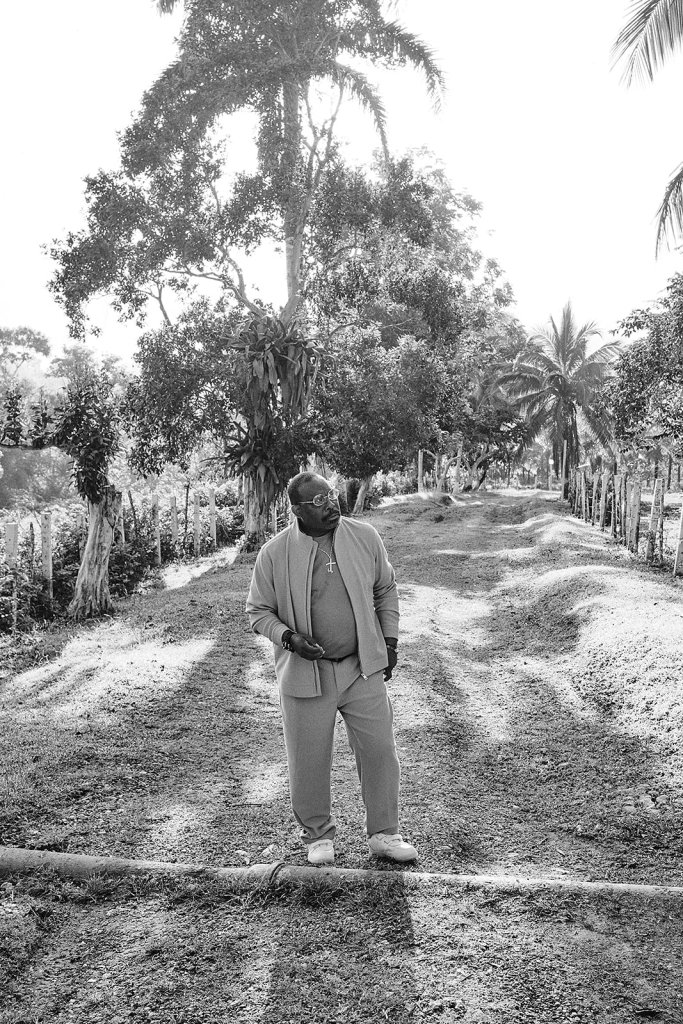
He never ran, not even when people told him to. Because running would have meant leaving his children. “When advice was coming that, ‘boy, you’re taking a beating, you must leave,’ that would have meant leaving my children. And I wouldn’t have done that then, and I wouldn’t have done it now.”
His legal team at Kozycki Law Firm continues to argue his case for “One hearing. One opportunity. One chance to be heard.” He has support from Georgia and US politicians on both sides of the aisle. He has never had a hearing before an immigration judge. He has no deportable offenses. He has no felonies. But he has faith.
Cartref, If Not Atlanta
“I didn’t say why me,” he told me. “Because then it would be, ‘why not me?’” “Why am I gonna live like a buzzard? Why am I gonna settle for the devil’s less instead of God’s best?”
But if the machine does not reverse itself, if the hearing never comes, if the private bill dies in committee, then there is Cartref.
Uncle Keith’s expansive property, which once hosted weddings and events. A guesthouse with rooms that have patios and balconies. Godfrey has caught his uncle’s vision, and he is applying military precision to it. He describes himself as an armor bearer, the biblical term for the one who carries out the leader’s instructions explicitly. Jonathan to David. He wants to bring traffic to Cartref through digital marketing and new technology. He wants to resurrect what was here before. The pool needs filling. The Honda needs its wheels. The kitchen already works.
He has envisioned potential business opportunities in Mexico with fellow deportees, like a cafe called “Coffee con Leche”. He has a linen and silk clothing line waiting to be revived, and he has found the local fabric store. He has knowledge of German-Jamaican history that made him weep at the Whitney Plantation in Louisiana, where he understood the layers of displacement and extraction because he carries them all in the same body: Jamaica, Florida, Atlanta, Cold War Germany, detention centers in Georgia, Louisiana, and now Cartref.
He has the Davis Cup community that received him his first weekend back, his doubles partner, Noel Rutherford, who hadn’t seen him in thirty years, and nearly passed out. He has the JP in Port Maria who pulled out his stamps in a parking lot for a stranger. He has the community that helped him navigate getting his birth certificate, his TRN, and his provisional driver’s license.
And he has the rocky path that runs up to the property under a canopy of coconut palms and pimento, where the dogs came to greet us, where the road stretched behind us into soft haze, and the palms fanned out above like something someone staged but didn’t.
“What does home mean?” Kirth asked, near the end.
“Home is everything,” he said. “I’m a homebody.”
Then he described April’s arrival at their house in Atlanta. The two fern plants that sandwich the garage door. The white gardenias that hit your nostrils before you reach the entrance, because he is all things sensory, because the man designs a home the way he designs a uniform or a plate of food, with the precision of someone who believes your surroundings shape your spirit. The gold-leafed mirror. The leather furniture. The tablecloth he sewed himself to match the seat coverings.
All of that is a thousand miles away. He is in St. Mary now, at his uncle’s place, learning to live inside someone else’s vision.
But the pot is on the fire. The ginger tea is fresh and potent, and he might add some pimento leaf tomorrow.
The bracelet on his wrist says what it says.
GODFREE.
 Negril Stories
Leave a comment